Transforming Activation
How improving product understanding became a bigger growth opportunity than optimizing a walkthrough.
Nearpod
Director of UX, Product Design
2020
2x increase in activation | 10x increase in retention
The Question
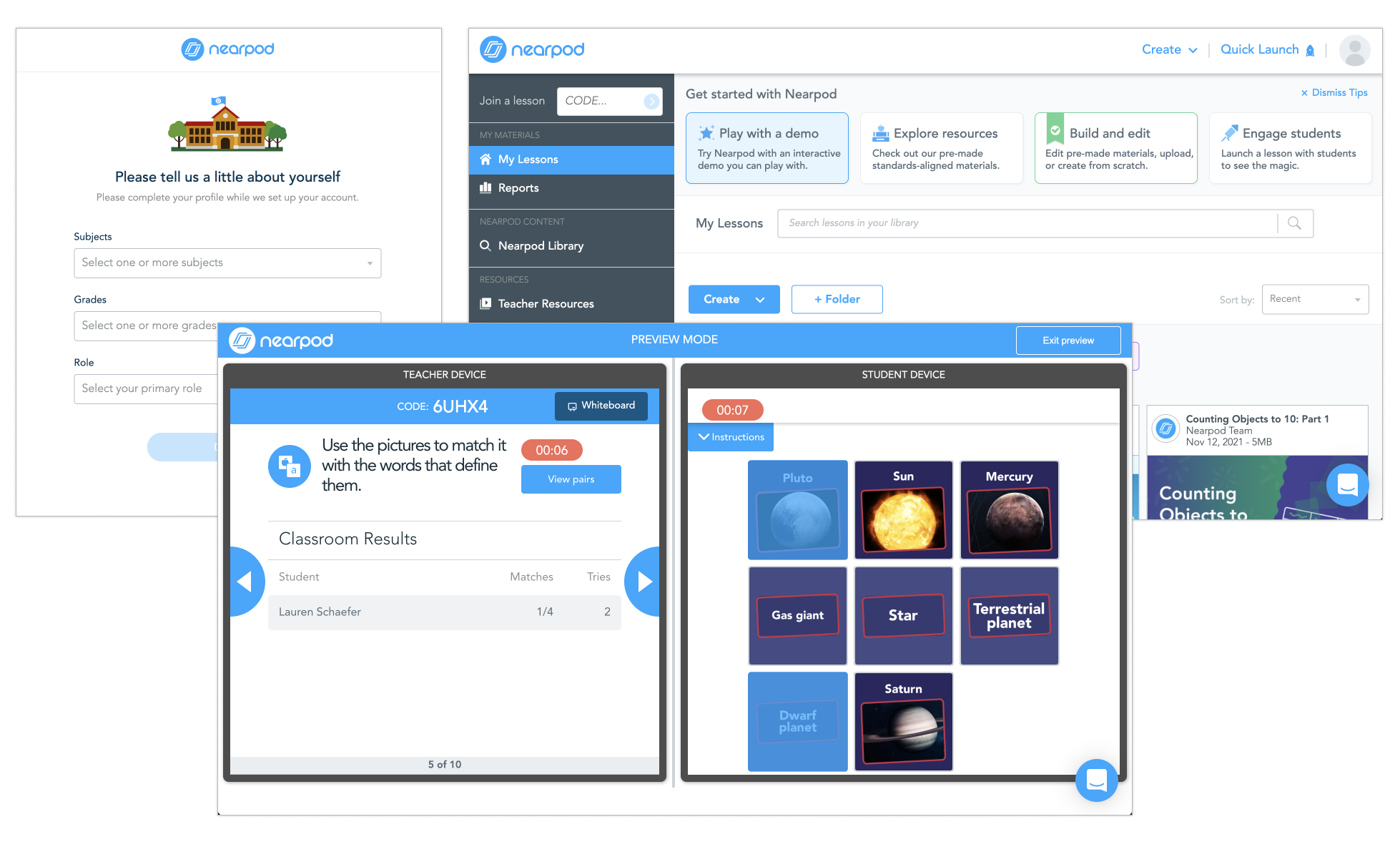
During the rapid shift to online teaching in 2020, how could we help new teachers become successful faster and better understand the product’s value?
Nearpod was attracting large numbers of new teachers, but too many were signing up without reaching value or returning.
Early evidence showed that users who completed onboarding still did not understand why Nearpod mattered or how it fit their classroom. We were getting some unprecedented traffic coming to the product and needed to figure out how to capture a larger share of it quickly.
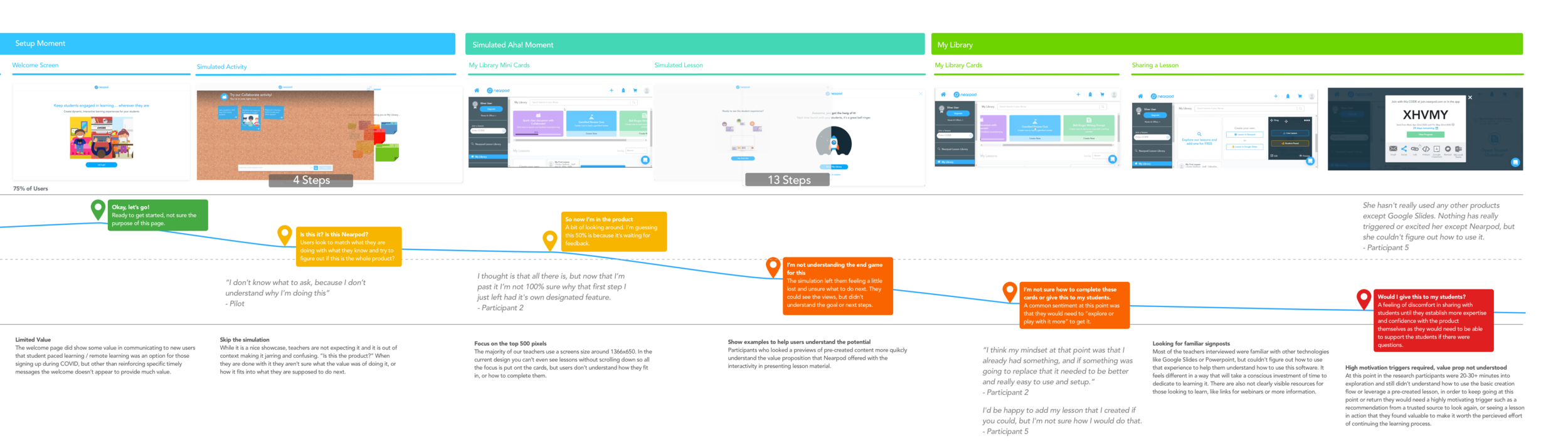
“I don’t know what to ask, because I don’t understand why I’m doing this”
“I thought is that all there is, but now that I’m past it I’m not 100% sure why that first step I just left had it’s own designated feature.”
My Contribution
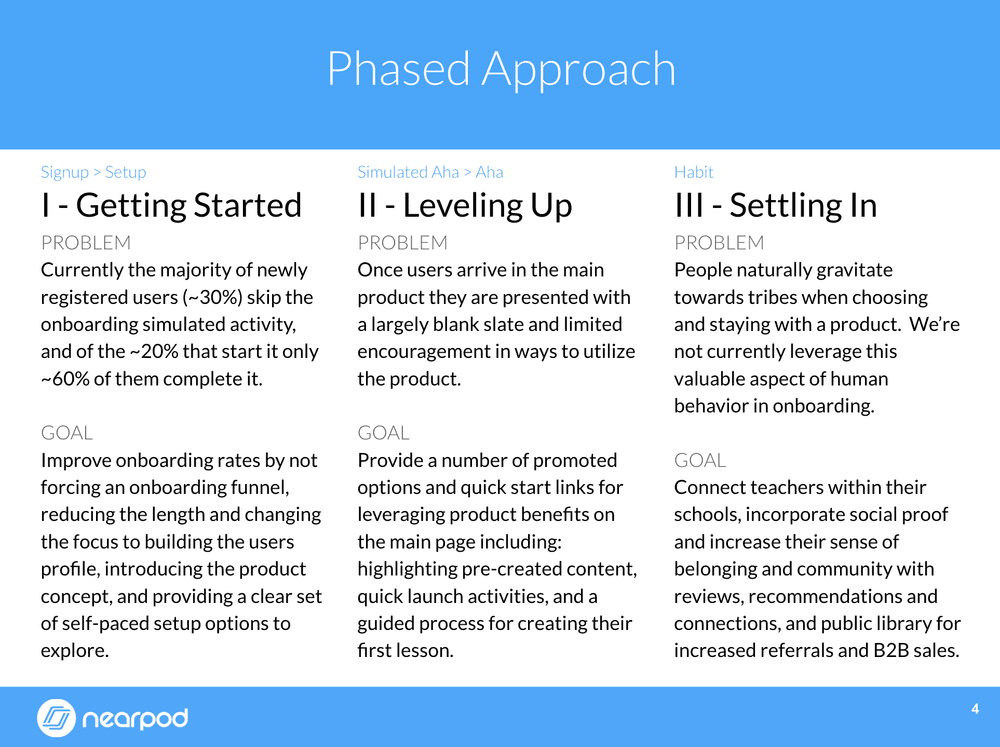
Identified a mental model mismatch with teacher expectations in the current flow. Developed a staged strategy for rolling out a new onboarding funnel that would better match teachers’ goals while clearly connecting them to the product value and an understanding of how the product works.
Early Research
The existing onboarding exposed teachers to nearly twenty screens of prescribed tasks and introduced a
narrow feature before they understood the larger product.
Early research revealed a fundamental disconnect. Teachers could complete the onboarding walkthrough and still misunderstand what Nearpod was for, how it fit in their classroom, and why they should return. The existing onboarding flow was teaching a specific feature of the interface before teachers had a useful mental model of the product value overall.
Teacher Goals
Rather than asking only how to reduce clicks, I reframed the work around a larger question:
What job were teachers hiring Nearpod to do?
Student Checks
A way quickly understand what students know in the moment.
Interactive Education
“Turn existing powerpoint and pdf’s in to enriching multimedia presentations with interactive features”
Hybrid Class Interface
A solution for hybrid learning that doesn’t sacrifice their ability to connect with students.
Resource Libraries
A tool for efficient resources to aid in teaching that don’t require a lot of overhead (pre-made lessons)
Key Decisions & Direction
I identified the mental-model problem, helped define the activation strategy, and set the direction for a first experience centered on product understanding. I partnered with Growth and Engineering on sequencing and validation and led the design work across the broader experimentation program.
The experience was researched, designed, tested, and shipped through a cross-functional effort. The outcomes reflect the broader sequence of experiments, not one isolated screen or release.
Focus onboarding on product understanding rather than feature education.
Reduce unnecessary initial investment while increasing meaningful exploration and attachment.
Let teachers experience the product from teacher and student perspectives.
Use guided tours and simulations to support exploration autonomy.
Deliver the work as a phased experimentation program rather than one large redesign
Results
2x increase in activation
10x increase in retention/engagement.
Across the resulting growth experiments, activation doubled and retention/engagement increased tenfold. Multiple experiments were delivered over time, and these outcomes are evidence of the broader strategy and cross-functional program I delivered.
From Prescribed Tasks to Guided Exploration
The resulting flow gave teachers a simpler path into the product and more freedom to explore. Instead of forcing them through prescribed tasks, guided tours and simulations helped them understand how Nearpod would actually work with their students and create a more engaging learning experience.
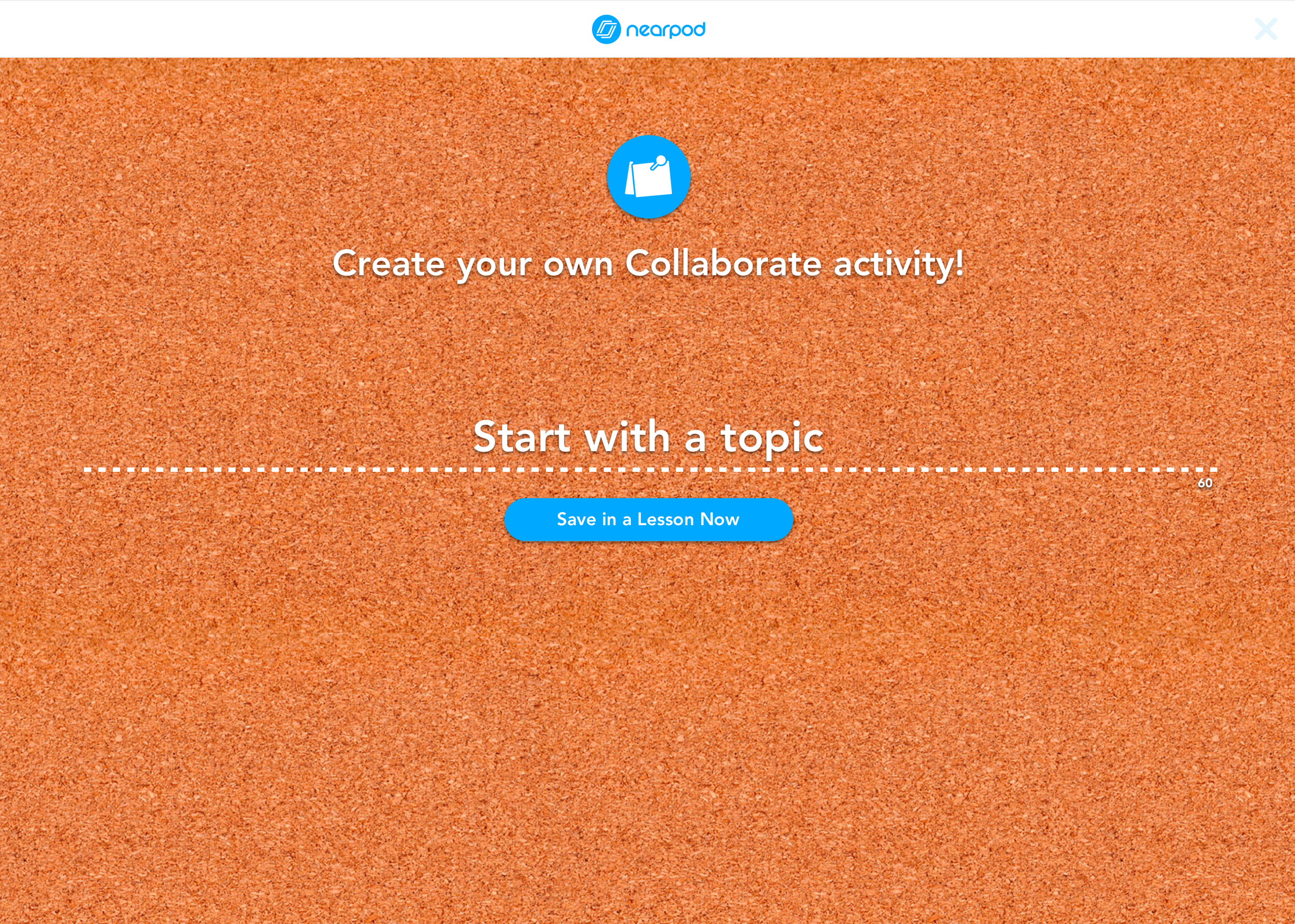
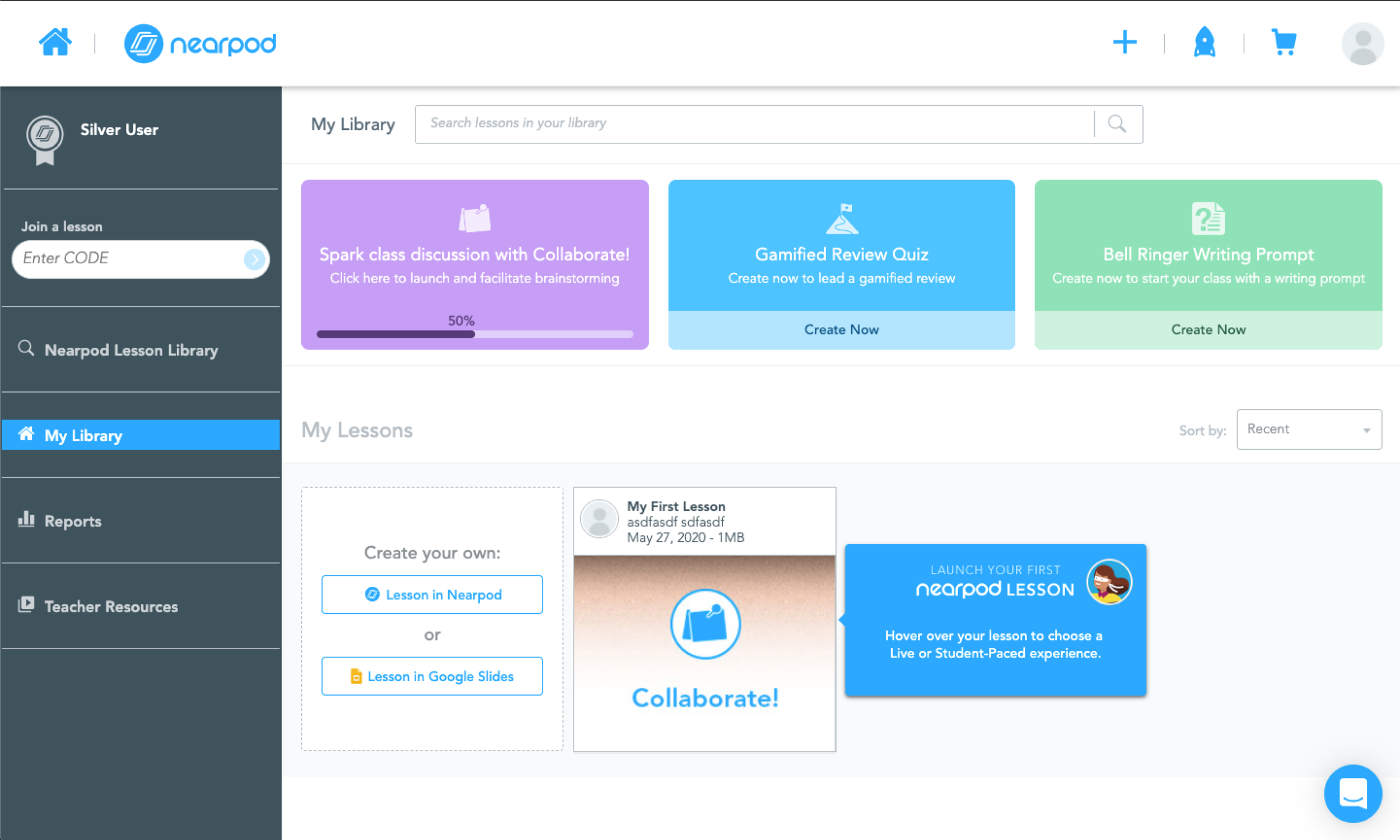
Prior: 20-step feature and signup flow ending with a new lesson and confusion.
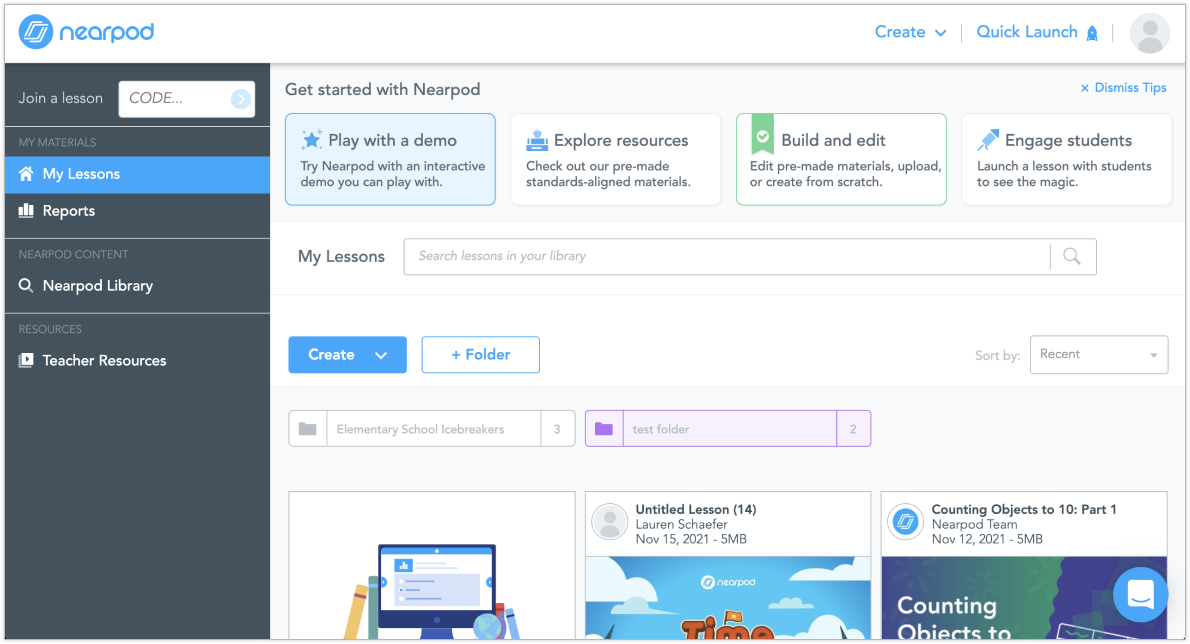
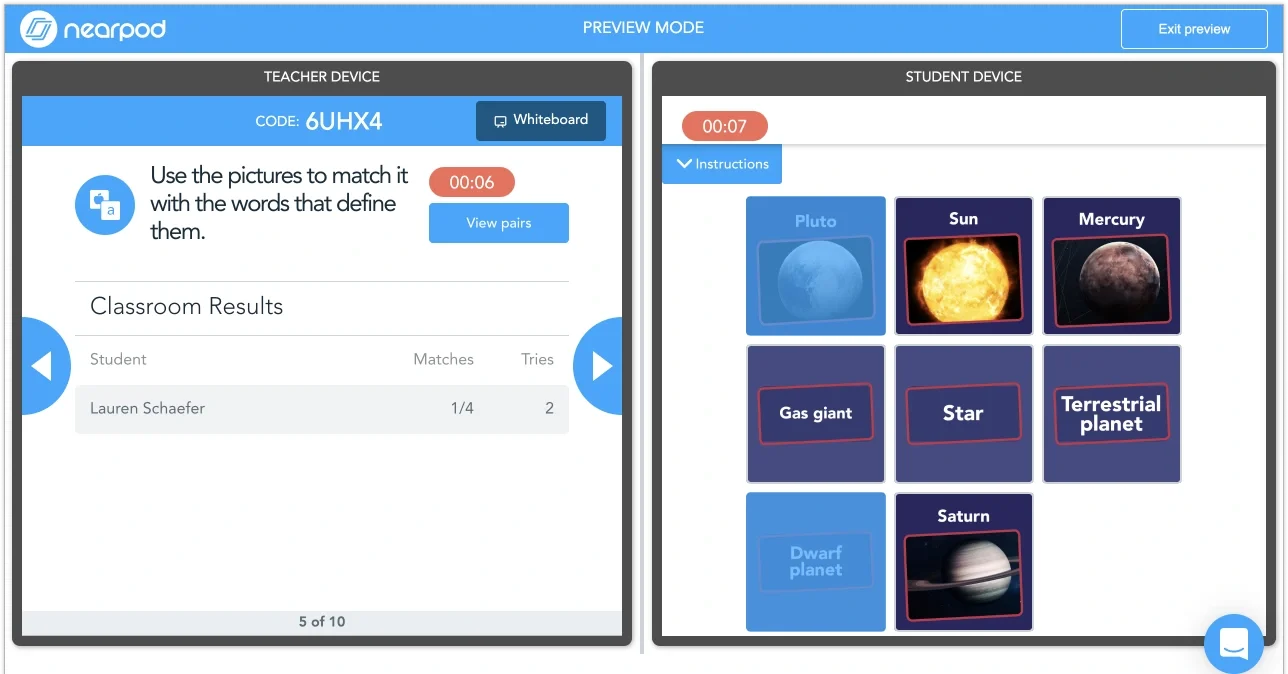
New: Land on the main page with the option to demo teacher and student view.
Reflection
The most valuable UX contribution is not always making the current flow easier. Sometimes it is recognizing that the team is optimizing the wrong problem.
By connecting research, behavior, and motivation, I helped shift the conversation from reducing friction to building product understanding.