Somma
A guided wine-tasting app that teaches people what to notice, designed and built with AI tools.
Pink Hippo
Role: UX Design, Strategy, and Research
2026
2nd Place People's Choice Vibe Coding Games

The Problem
Wine tasting can feel intimidating. Rating a bottle doesn't help you understand why you liked it or build your palate, and most wine apps focus on ratings, shopping and inventory. I wanted something for everyday drinkers that helps you notice what you're tasting, learn the vocabulary, and remember what you liked.
The insight came from lived experience. I spent time with winemakers in France during a graduate innovation course, and I've attended many guided tastings in the US, some excellent and some with almost no instruction. Many wine lovers want the nuance, but cost and travel keep it out of reach. Wine club hosts told me they'd use it.
What I Built
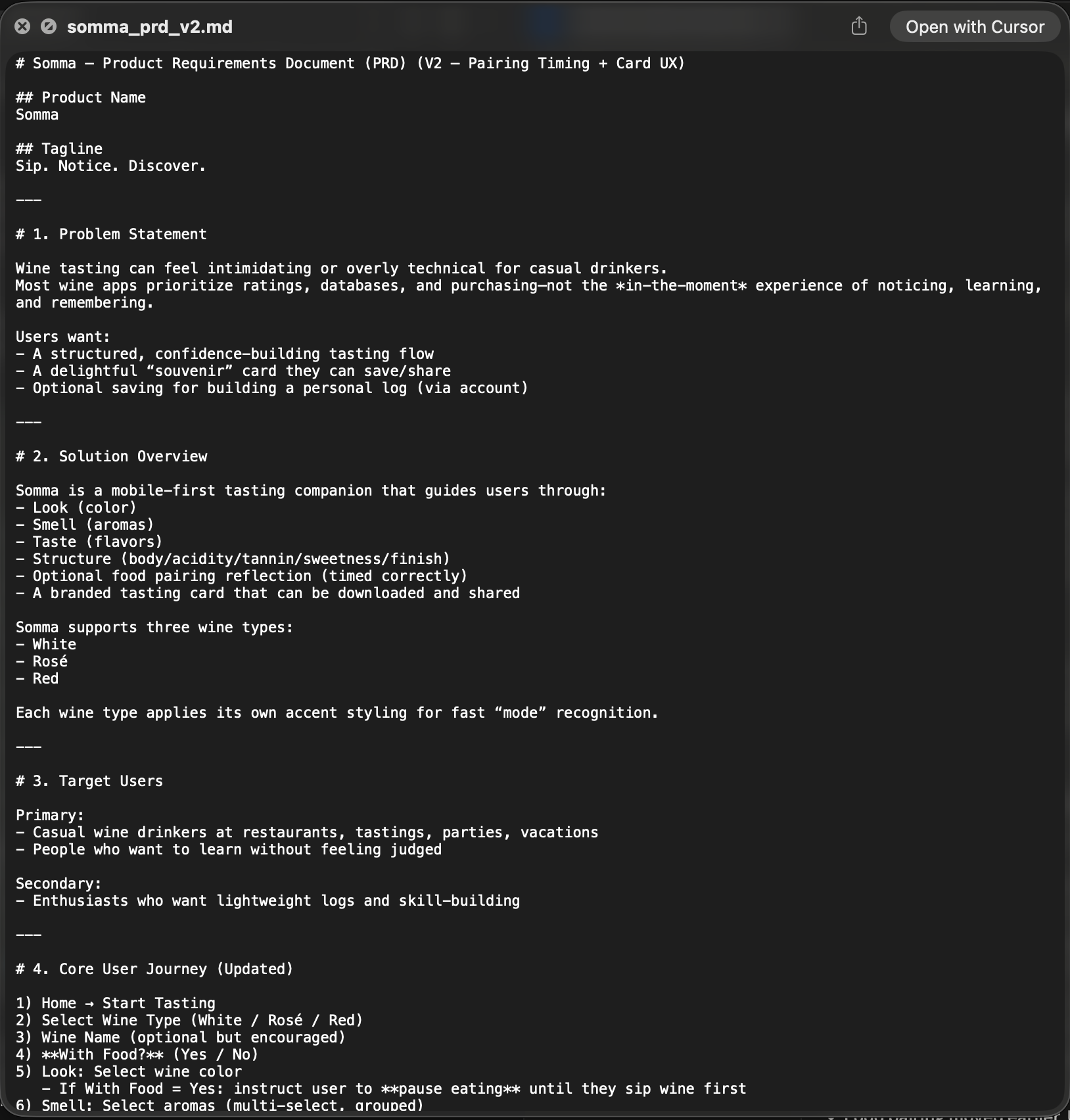
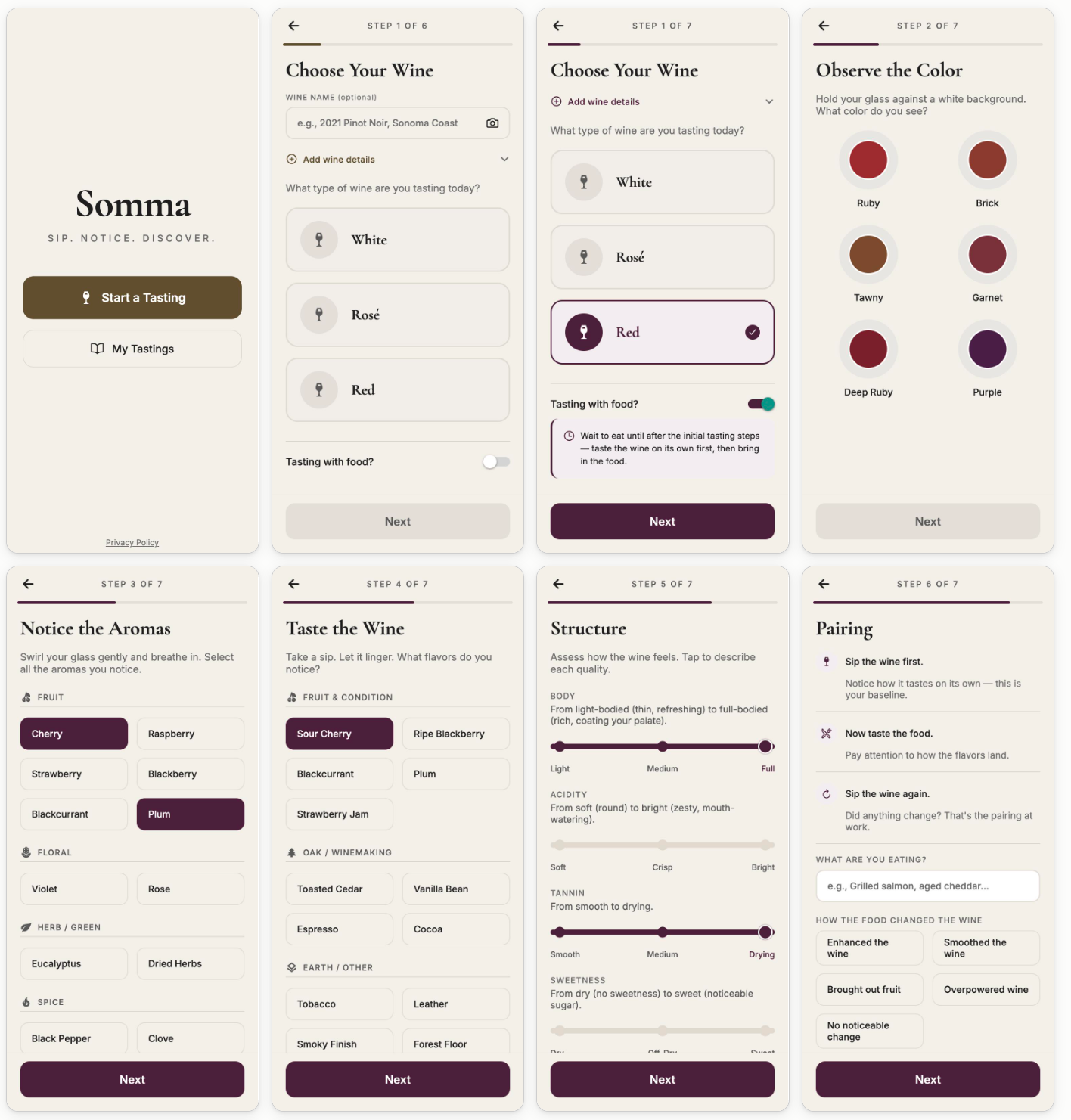
Somma is a guided tasting ritual: choose the wine type, observe the color, notice the aromas, identify the flavors, assess the structure, optionally explore how food changes the wine, then rate it and get a tasting card to save or share. I started it as a four-day brief for the Vibe Coding Games using ChatGPT and Replit. Now I’m working on rebuilding it as a native app with Claude Code as my AI Developer.
Decisions That Shaped the Design
These changed because I looked at what was built and judged it.
Rosé became its own wine type. I first placed it under red. That conflicted with how people think about wine, so each type now has its own colors and accent, recognizable at a glance.
I removed UI when it got noisy. Individual icons for every aroma looked good in theory and became clutter, so I kept simple icons on category headings only.
An accessibility call. An early prototype colored each descriptor to match its flavor. On screen, the contrast was poor, so descriptors became high-contrast neutral text.
Structure became sliders. Body, acidity, sweetness and finish are continuums. I rewrote each label and explanation to share one mental model (Light to Full, Soft to Bright) so each slider teaches.
Food pairing moved earlier. Users need to know before they eat to taste the wine alone first. Step 1 now asks about food and says to wait. Pairing then runs sip, taste the food, sip again.
The card is part of the product. When early export fixes started degrading the good in-app card, I protected it and treated export as a separate rendering problem. Technically valid output wasn't the same as acceptable output.
Working with AI
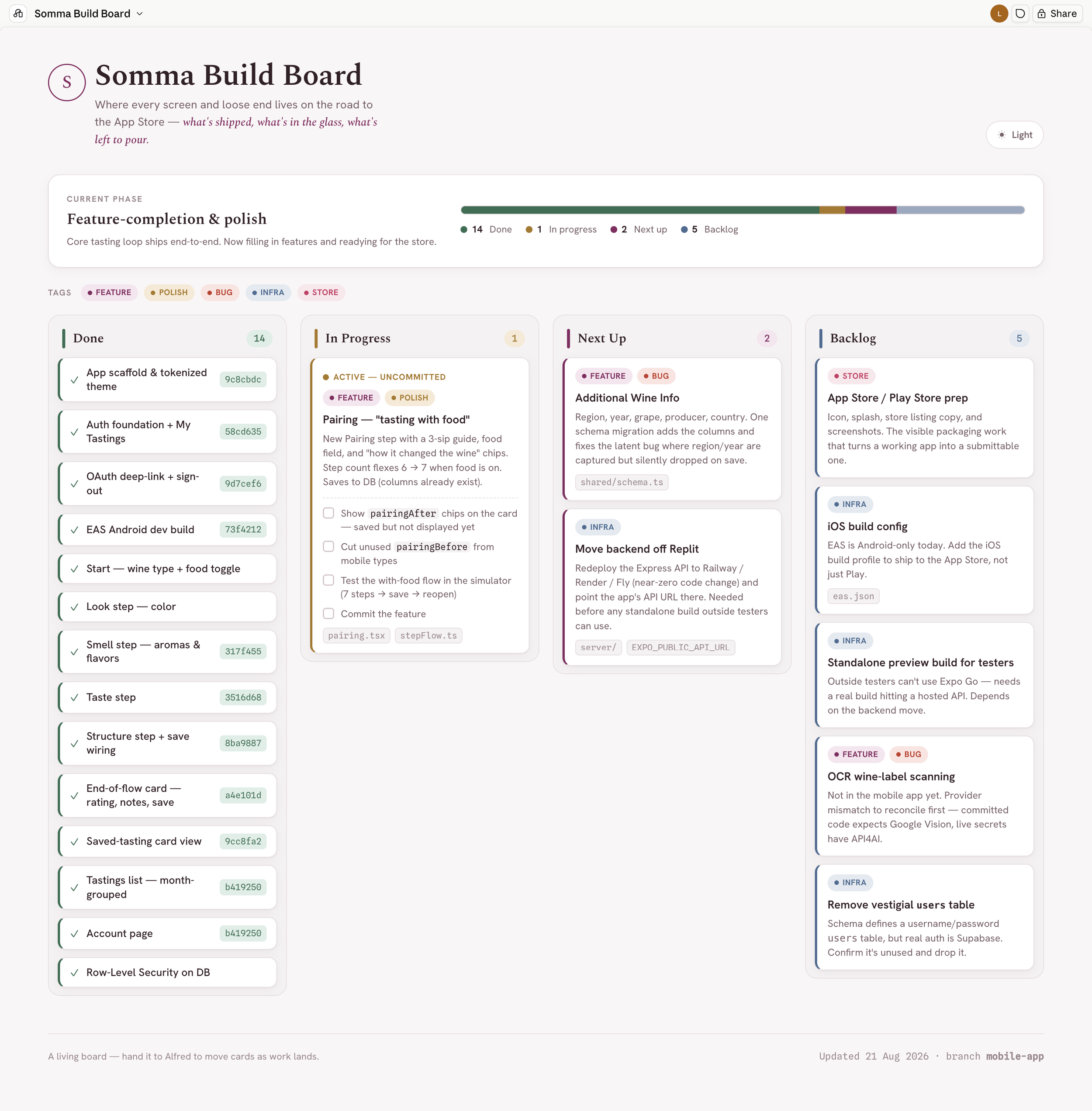
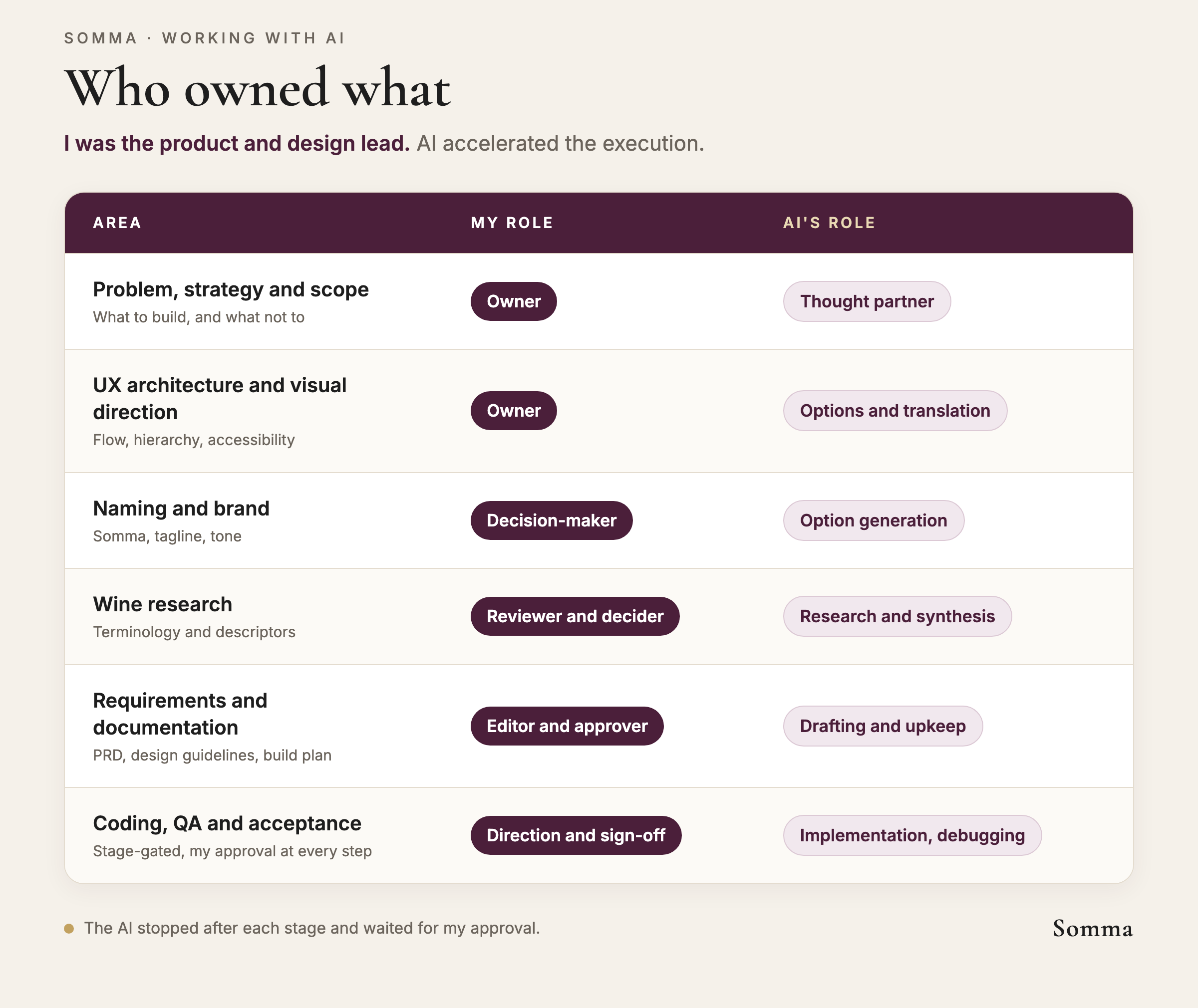
I used AI for research, documentation and implementation, with explicit gates. Before building, I wrote a product requirements document, analyzed the current market, crafted design guidelines as the visual source of truth, and created a staged build plan. The AI had to stop after each stage and wait for my approval. Because the product lived in documents, it moved intact across build tools using Git as the source of truth.
Feedback and Testing
I tested two ways.
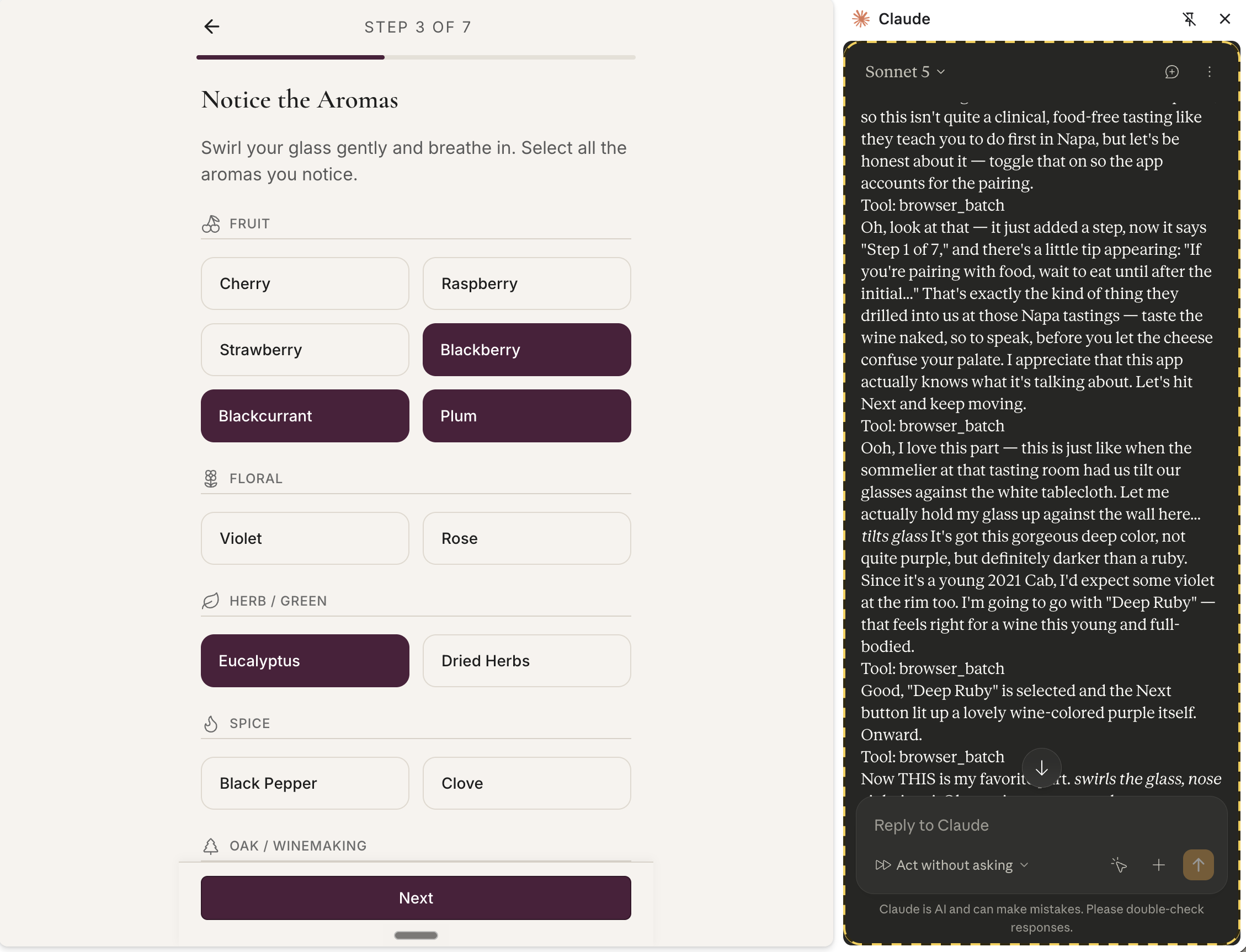
I ran Claude in the browser through several personas, each using the app as synthetic users while thinking aloud.
I also watched real people use it in a variety of settings
Findings went into a prioritized backlog in Notion and into the native rebuild.
Where It Stands
The core tasting loop works end to end in the native app on a real Android device, including accounts, saved tastings and food pairing. I decided to rebuild natively with Expo so one codebase serves both stores, and I designed for store requirements early, including account deletion and privacy. I'm now preparing it for the App Stores. An early web demo can still be previewed here: https://sommatasting.com/
Recognition
Somma won 2nd place, People's Choice Award, for design and functionality in the Vibe Coding Games, an international AI design and coding competition, with more than 100 projects submitted.