From Fragmented Features to a Coherent Product Experience
Maturing the Seesaw platform to support future growth through deeper customer adoption and improved new-customer activation.
Seesaw
Director of Product Design & Research
2023-2026
+11% in message engagement | +20% journal interactions | +12% activity assignments | keyword matching from 36% to 90% | 200% ROI in messaging tool
The Problem
A growing platform was becoming harder for teachers to understand and adopt.
I recognized that several seemingly separate product problems were symptoms of a fragmented experience system and established a multi-year direction and experience strategy to address them coherently.
When I joined Seesaw in 2023, I experienced what new teachers often described in research: it was surprisingly difficult to orient within the product.
While the platform provided immense value to those who know how to use it, it had evolved feature by feature without a unifying structure or clear home base. Navigation shifted teachers in and out of separate spaces. Product changes were difficult to communicate to users, and their feedback was difficult to collect. The search for our heavily invested activity library did not reliably surface relevant content. New users had no onboarding and, as busy teachers, limited bandwidth to test the product’s full value in their K-2 classrooms.
Each issue could have become an isolated project. Taken together, they revealed a more important problem: Seesaw lacked a coherent way for teachers to understand where they were, what the product could help them do, and what to do next.
My Contribution
Established the multi-year direction, aligned leaders, sequenced investment, and created the operating conditions for delivery.
The Opportunity
How might we mature the experience so teachers could understand, navigate, and adopt a rapidly growing platform more easily, while creating a foundation for future growth, regionalization, and onboarding?
The Direction I Established
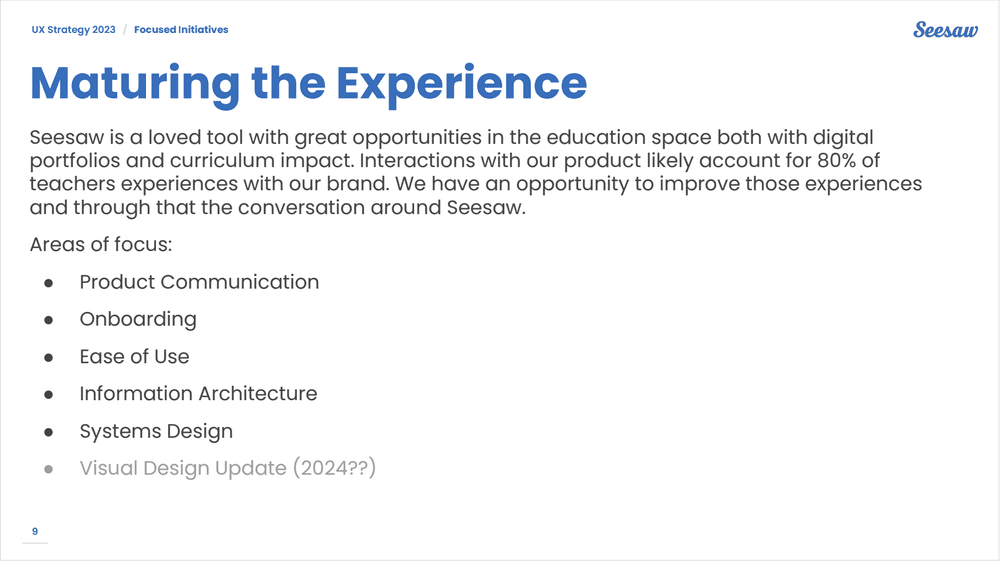
I established a three-year experience direction and approached it so that the work in each phase created the capability and organizational support for the next phase. I aligned partners around the larger system, secured support for enabling tools and practices, set expectations for evidence and quality, and coached and reviewed the work as it moved from strategy into delivery.
Designers and researchers on my team led detailed discovery, interaction and visual design, testing, and iteration with Product and Engineering. My role was to establish direction, coordinate the roadmap timing with PM’s, connect work across initiatives, create the operating conditions, and strengthen decisions and outputs.
Preliminary Research
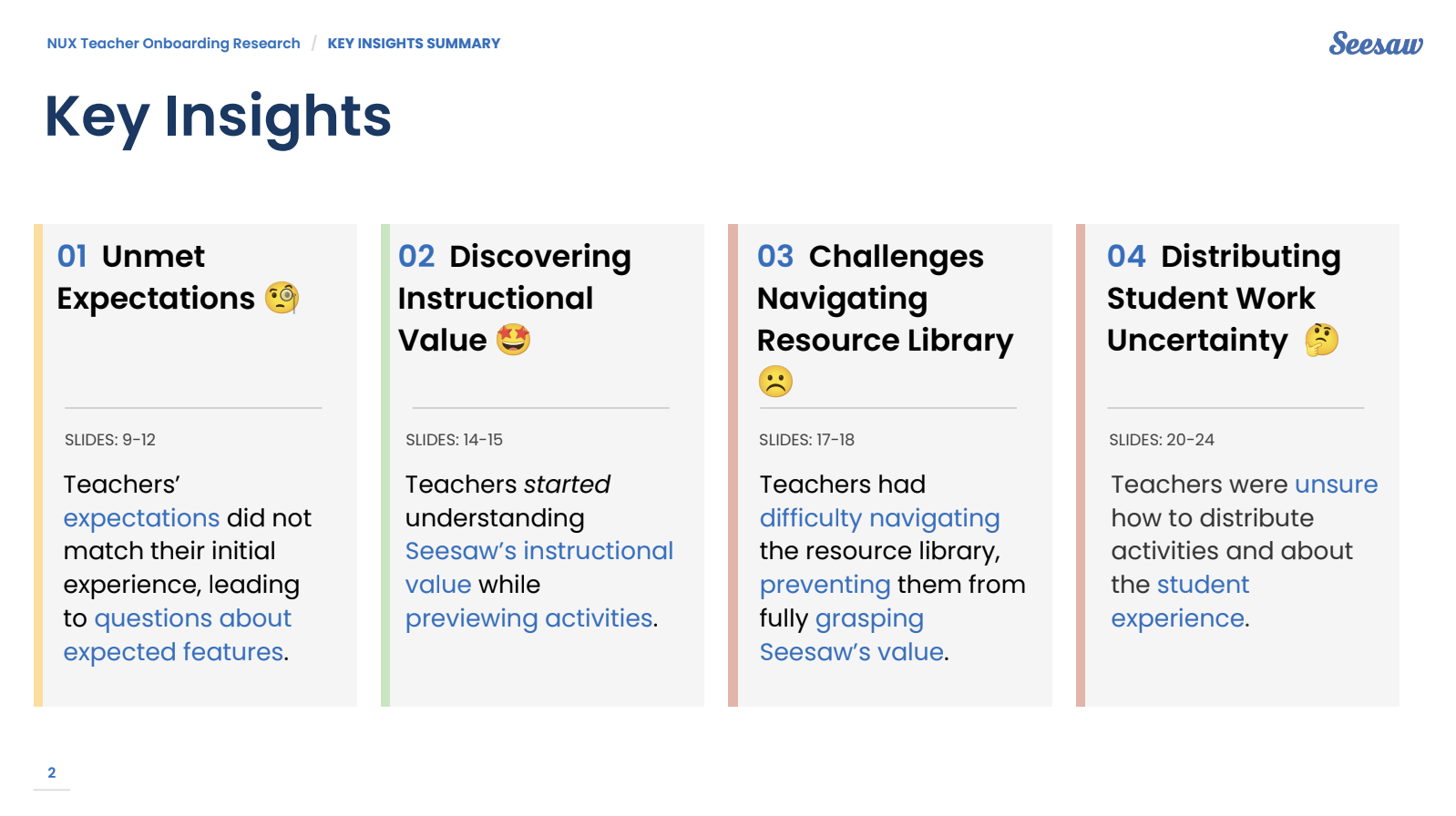
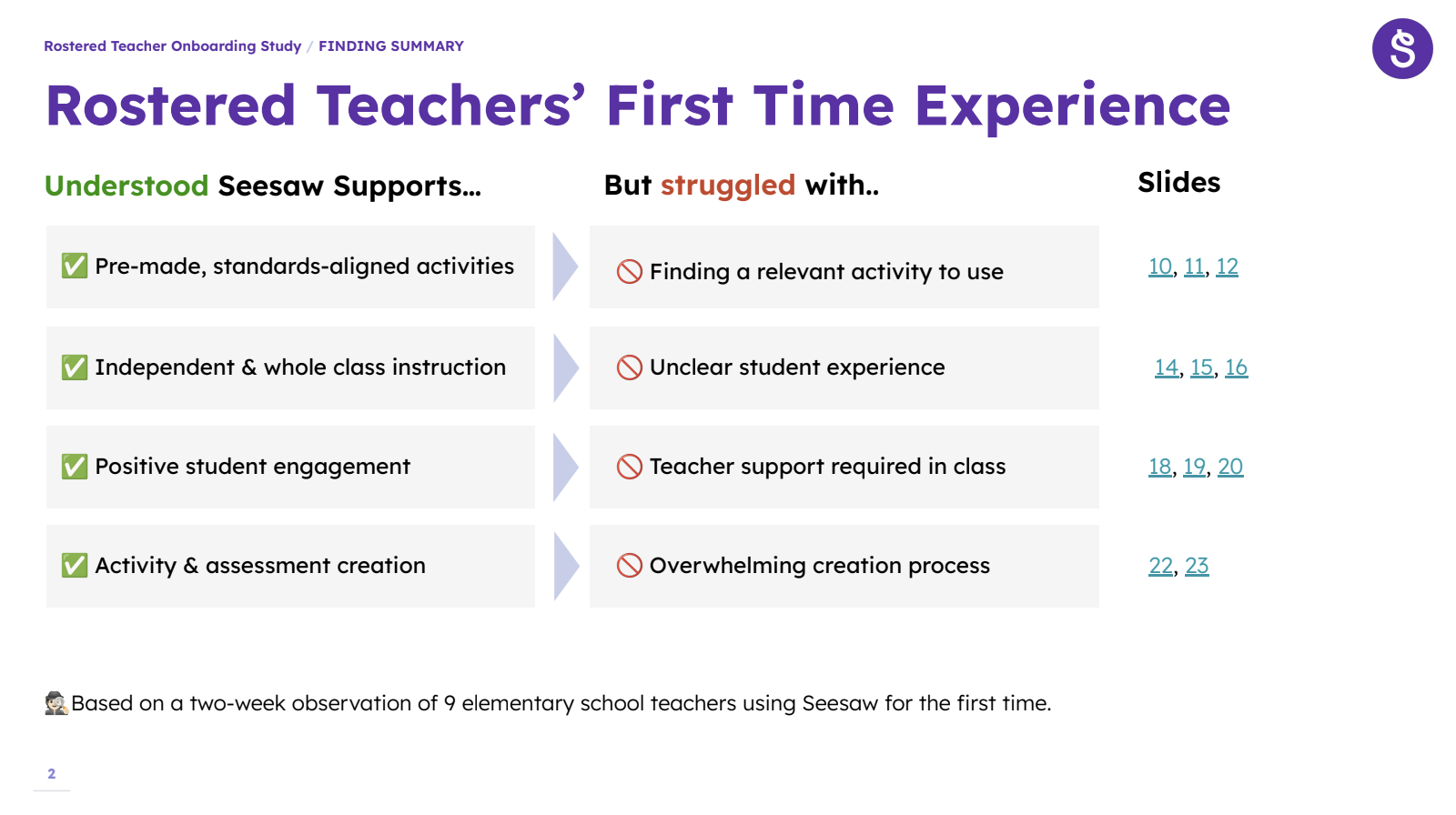
I worked with my research team to gather information on the holistic product experiences by running a few different studies during my first six months at Seesaw. Primarily targeting new teachers getting up to speed and their understanding of how to use the product.
This work validated the experience concerns and provided further evidence of key problem areas for measuring improvements.
“I’m still trying to figure out how to get to that main page. I don’t know how to get back, is this the main page?”
The Strategy
1. Build a stronger evidence system
We expanded the research footprint and invested in recurring feedback mechanisms. The goal was not simply to conduct more studies, but to make customer evidence easier to collect, interpret, and use in decisions.
2. Create a direct communication channel
I proposed and helped implement a no-code messaging platform that allowed Seesaw to communicate changes in context, support early onboarding, collect direct feedback, and eventually serve activation, adoption, renewal, and translation use cases.
3. Strengthen design and interaction consistency across the product
I clarified design-system ownership, established a cadence for updates, and introduced shared critique practices. These changes reduced the likelihood that teams would solve the same problem in different ways, improving overall product consistency. Additionally, it created artifact transparency across product teams, increasing overall alignment and raising the quality bar.
4. Help teachers orient and move through the system
We streamlined navigation, improved content discovery, and created a dedicated home experience. These changes made it easier to move across the platform while creating space for larger libraries, regionalized content, and a future onboarding funnel
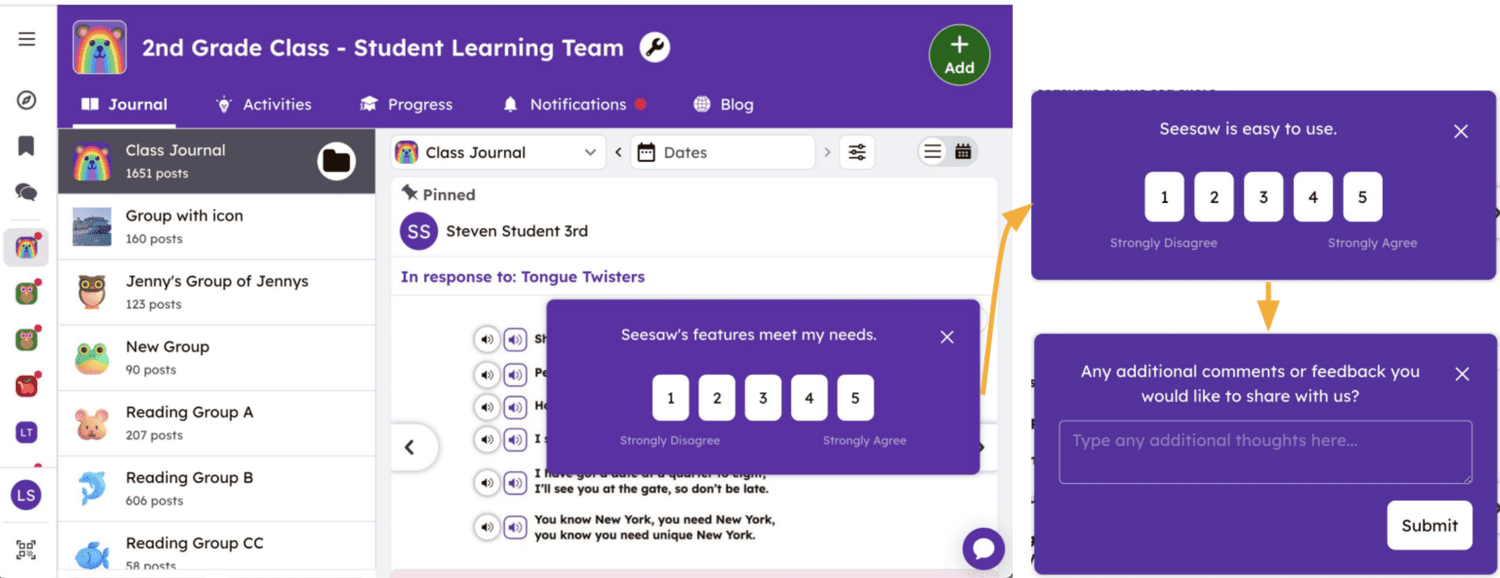
Product communication tooling allowing user feedback, in-product announcements, and feature guides. Released YE 2023
The Curve Ball
I was pulled in to help the marketing team during a leadership transition to provide direction for a brand transformation project. An external vendor had been brought in to deliver on the new brand, and both parties were having difficulty aligning on direction.
I was able to identify a major risk to the established brand with the “transformation” approach that could damage current brand recognition. I put together a proposal that instead focused on a brand progression, elevating the existing brand without discarding the current personality.
The direction shifted to align with my proposal, and we were able to move towards a clearer elevation of our current brand. After the new brand was finalized, I led the project to direct implementation of the new design across our product ecosystem. This dovetailed nicely into the strategy I was working on around updating and providing deeper ownership of our design system.
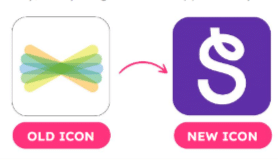
Updated app icons for rebrand 2024
Connecting the Pieces
The work was delivered incrementally from 2023-2026, but the direction was coherent from the outset. In-product messaging created a way to explain changes and learn from customers. Better research operations improved evidence and strategic alignment. Design-system operations and the brand refresh created product consistency. Navigation and search made the platform easier to move through. A dedicated home dashboard created a clearer starting point and foundation for future dedicated onboarding funnels.
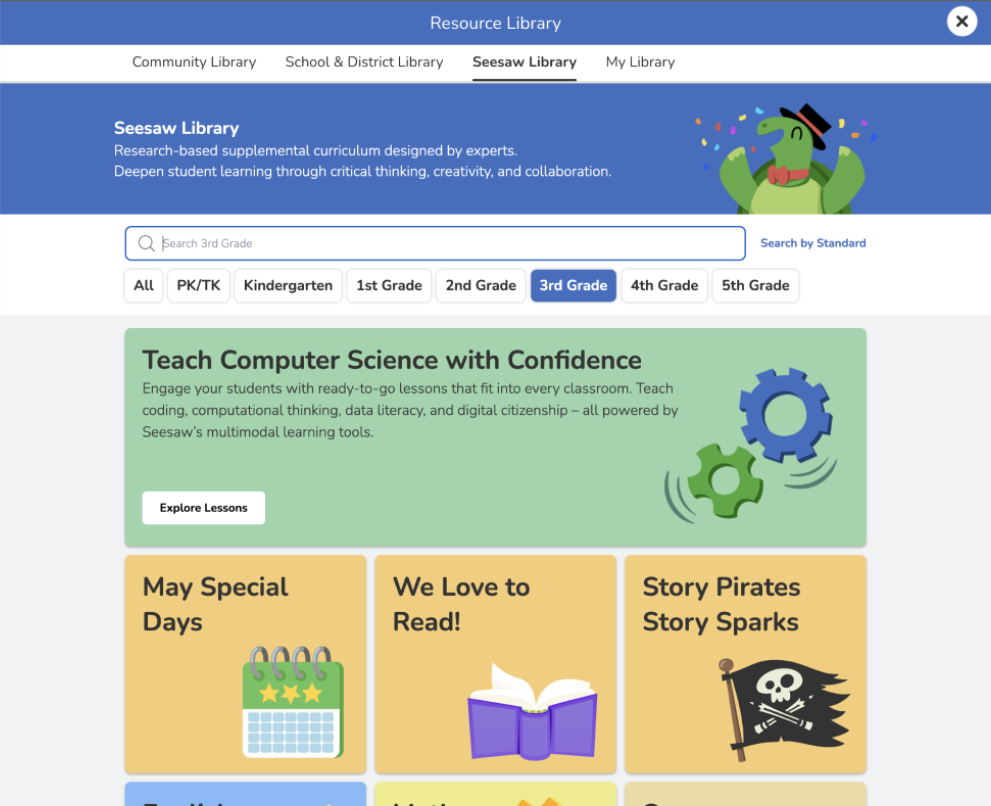
Prior Library Resources Page early 2023 - isolated navigation
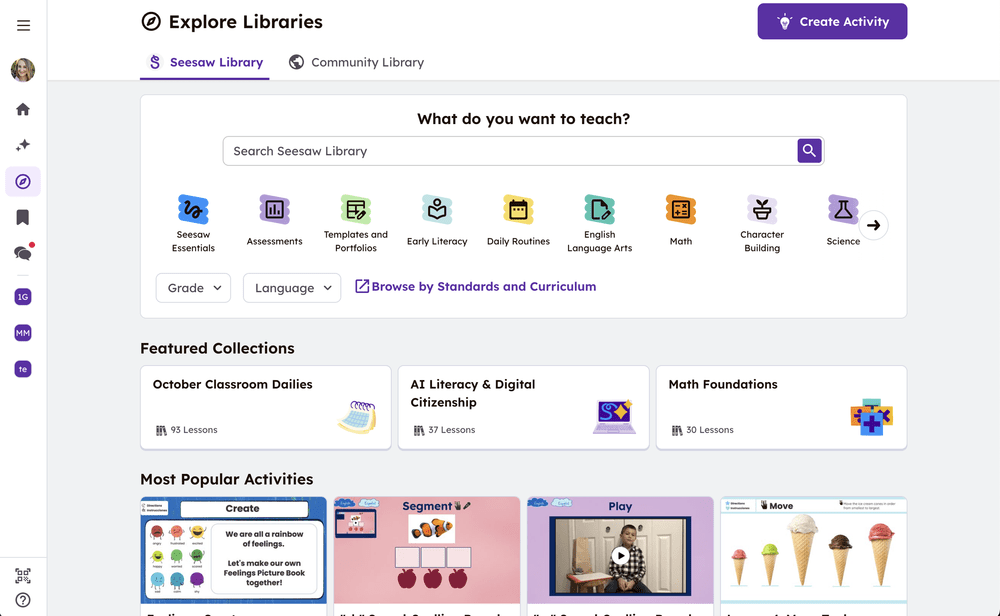
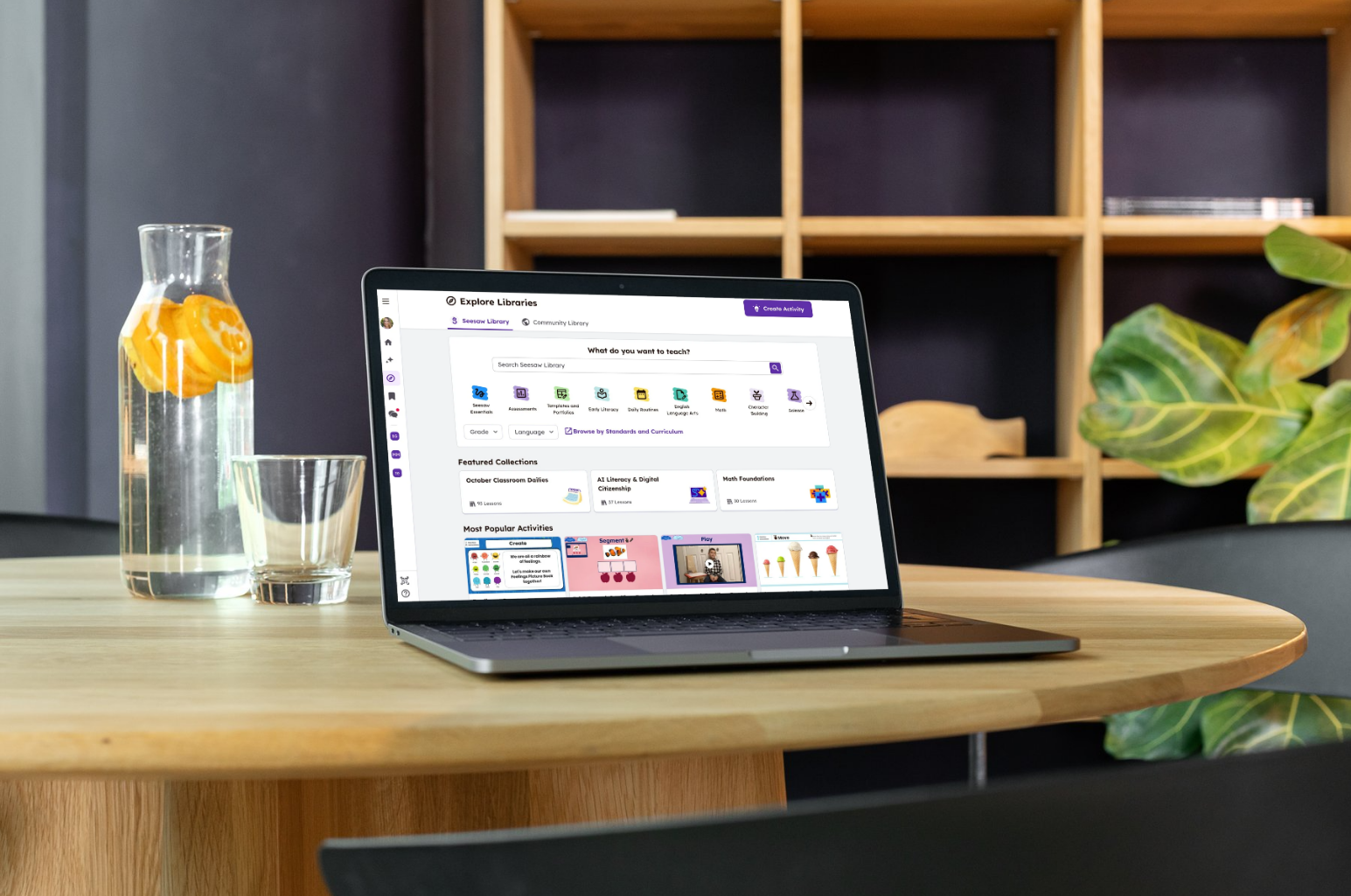
New Library Resources Page 2025 - collapsed centralized navigation
Results
Early first-quarter results of the home dashboard included an 11% increase in message engagement, 20% increase in journal interactions, and 12% increase in assignment activity.
Successful activity-search keyword matching increased from 36% to 90%.
The no-code messaging platform was estimated to deliver more than 200% ROI through engineering time saved within the first nine months.
In-product communication expanded to feedback prompts, feature awareness, renewal notices, activation and adoption support, and translations.
Research operations, UX-Lite surveys, and feedback loops created recurring customer-intelligence mechanisms.
Navigation, library, and home dashboard improvements established groundwork for onboarding, regionalization, adoption, and expansion.
The updated brand strengthened product visuals and created visual consistency across the product.
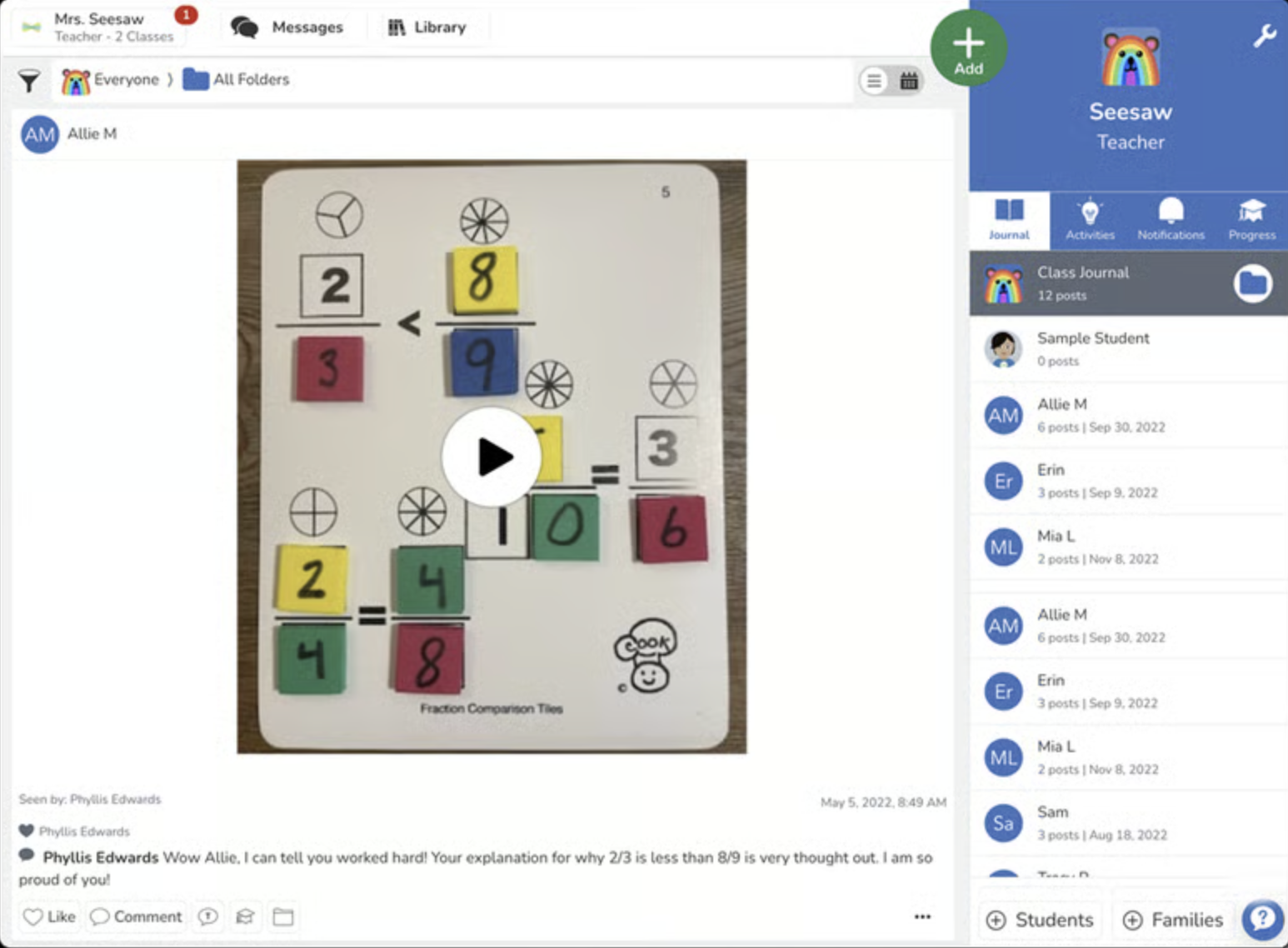
Prior Seesaw Landing 2023 - directly into a “classroom”
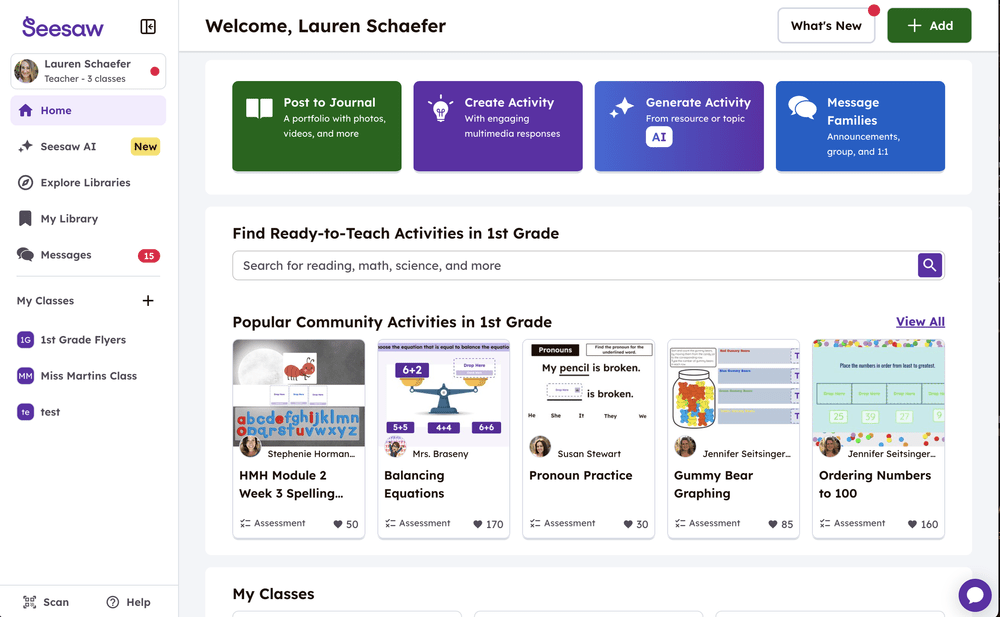
New Seesaw Homepage & Navigation Panel 2026
Some of my best work happens when a product has many signals but no shared story. I connect the evidence, identify the system behind the symptoms, define a direction people can act on, and create enough alignment and structure for teams to deliver meaningful change over time.