Unify Design System
Provide consistent and useful solutions for our customers by deploying a centralized design and development system to Ultimate's product teams.
Ultimate Software
Role: UX Design Lead
2018 - Enterprise HCM SaaS
The Problem
Pattern libraries at Ultimate had always been side projects, which limited the time and attention they got. Teams across the product line were solving the same interface problems in different ways, which raised design and development costs. Engineers had also seen an earlier style kit fade out. Earning their trust mattered as much as building the components.
My Role
I set the strategy for the system and set expectations for how it would work. I did the hands-on design leadership: the audit, the prioritization matrix, the principles, and the rollout approach. I worked with a designer, a researcher, and a front-end engineer.
Understanding who would use it
Our primary users were engineers and business analysts. Designers were secondary. Our researcher and I gathered evidence from several places:
Interviews with domain leads.
A survey of product leadership (23 responses).
A survey of 51 engineers and tech leads (17 responses).
A diary survey and Slack discussion group with 14 engineers.
What we heard:
Skepticism. People worried it would be abandoned like the earlier style kit.
Migration risk. Teams worried about backward compatibility and the cost of migrating older products.
Contribution. Engineers wanted to submit components themselves, with good documentation, code snippets and a change log.
Those findings shaped the adoption model, the release schedule, and the contribution and issue process.
Strategy
I audited the existing product, then used usage data to pick the most impactful pages and patterns for the beta. A prioritization matrix set the scope of each component.
I wrote four principles that engineers and designers could use to settle a design choice:
Similar: follow consistent, familiar patterns and language across the employee lifecycle.
Supportive: HR is complex, so help and training should be available and recede when not needed.
Smart: the system assists the user's decisions without replacing them.
Safe: with sensitive information, users should be able to explore without fear of destructive actions.
A few weeks after we published them, an engineer cited one in a review: "what was the new principle… 'similar'?"
Building it
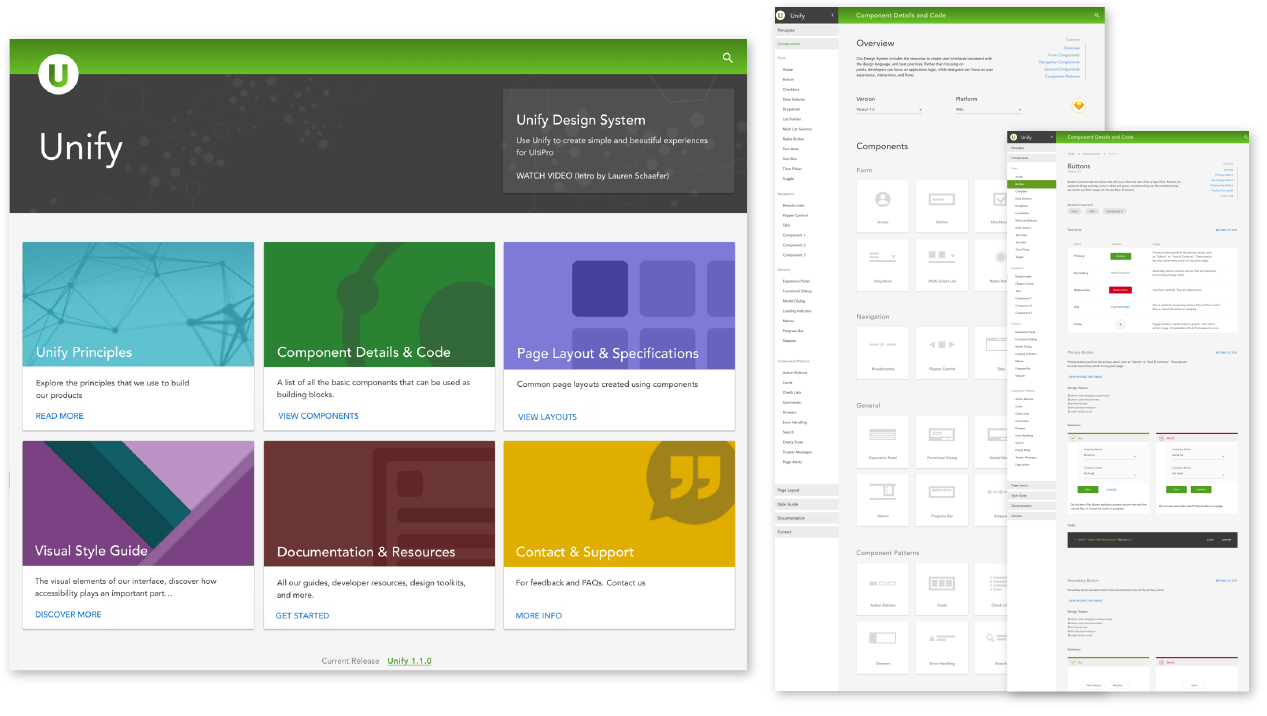
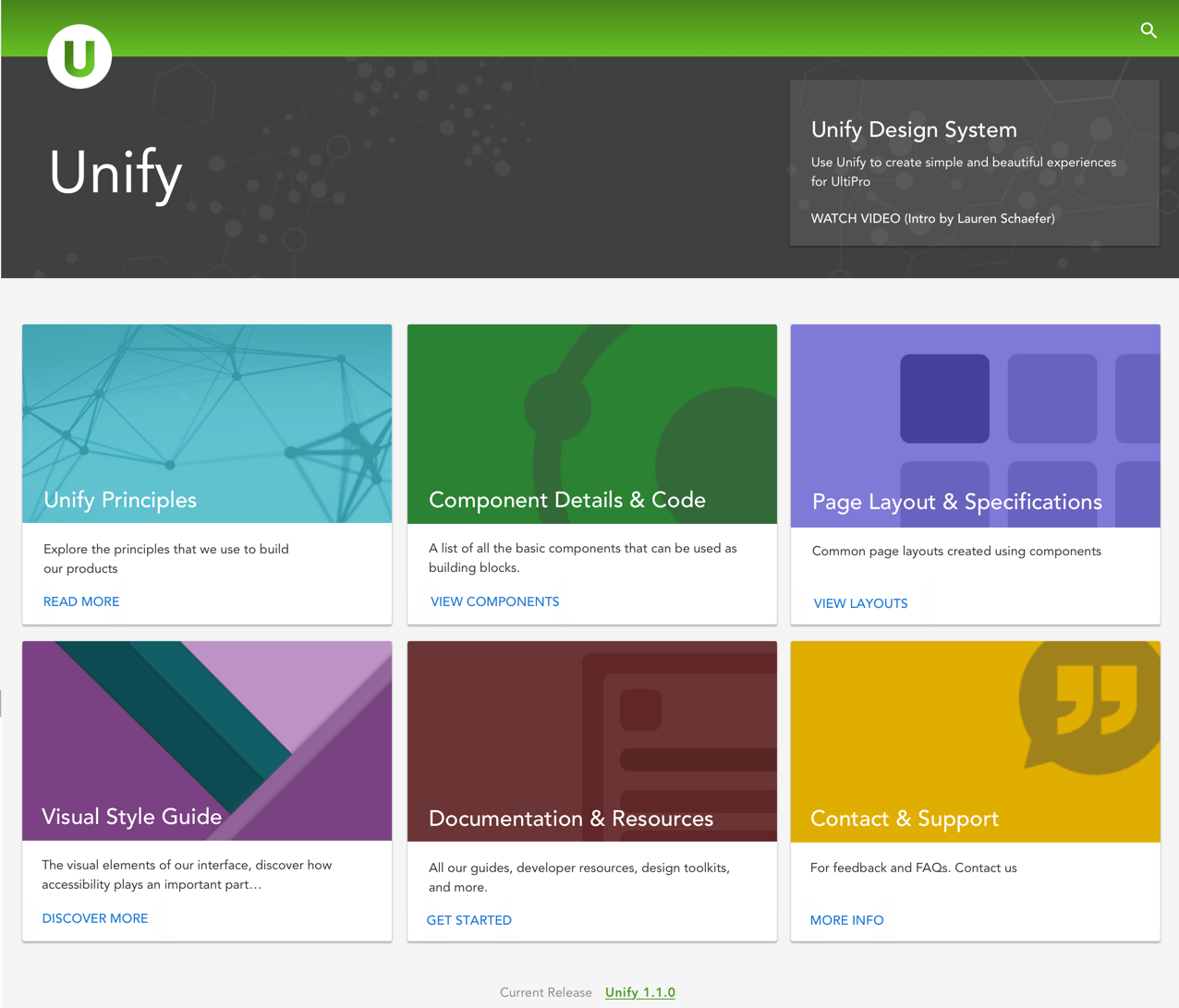
We hosted the system on an in-house site. The designer and I built a high-fidelity clickable demo and tested it in two rounds. The second round used RITE testing to finalize the details. By the end, engineers were asking when it would be released.
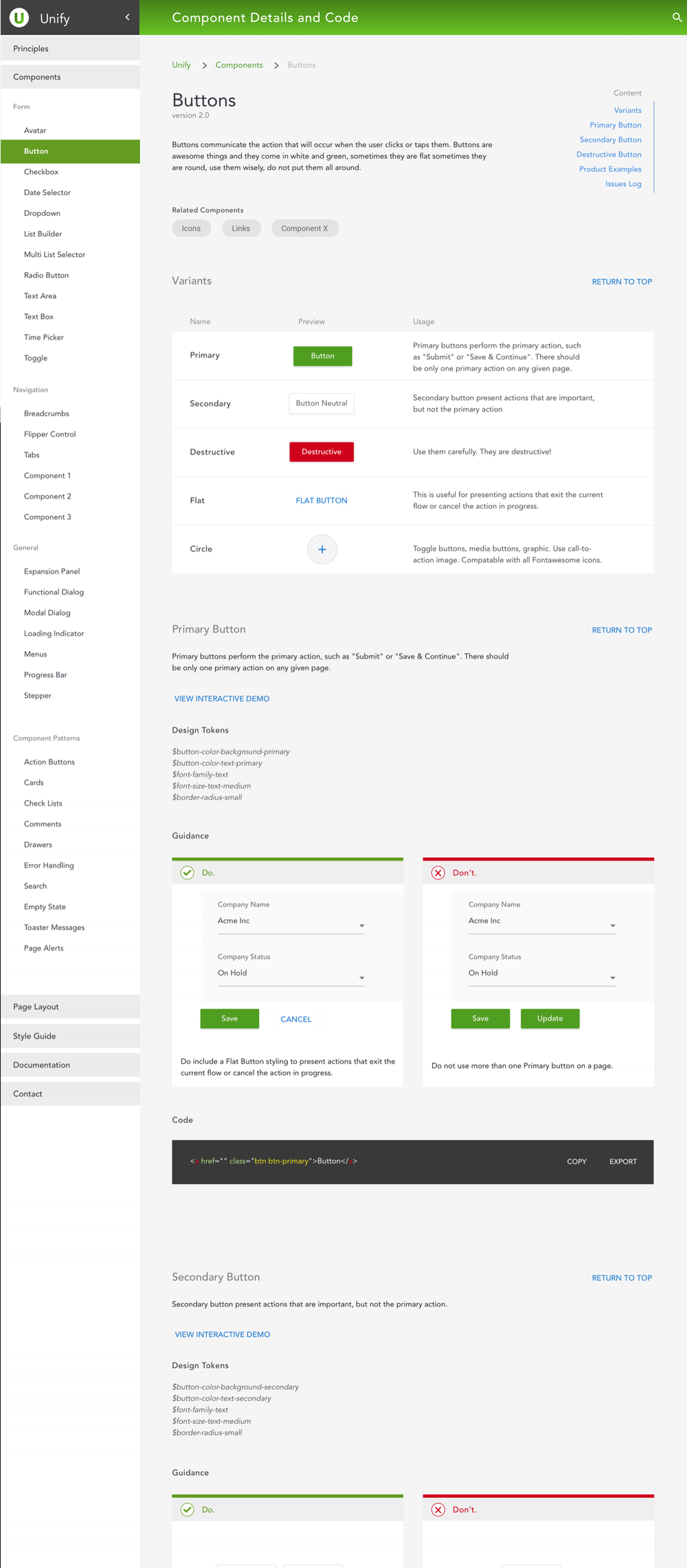
Each component included front-end code, interaction guidelines, use cases and accessibility standards. We tracked every one on a status board from designed to documented to built to published.
Rolling it out
I focused on adoption, because components alone don't change a codebase:
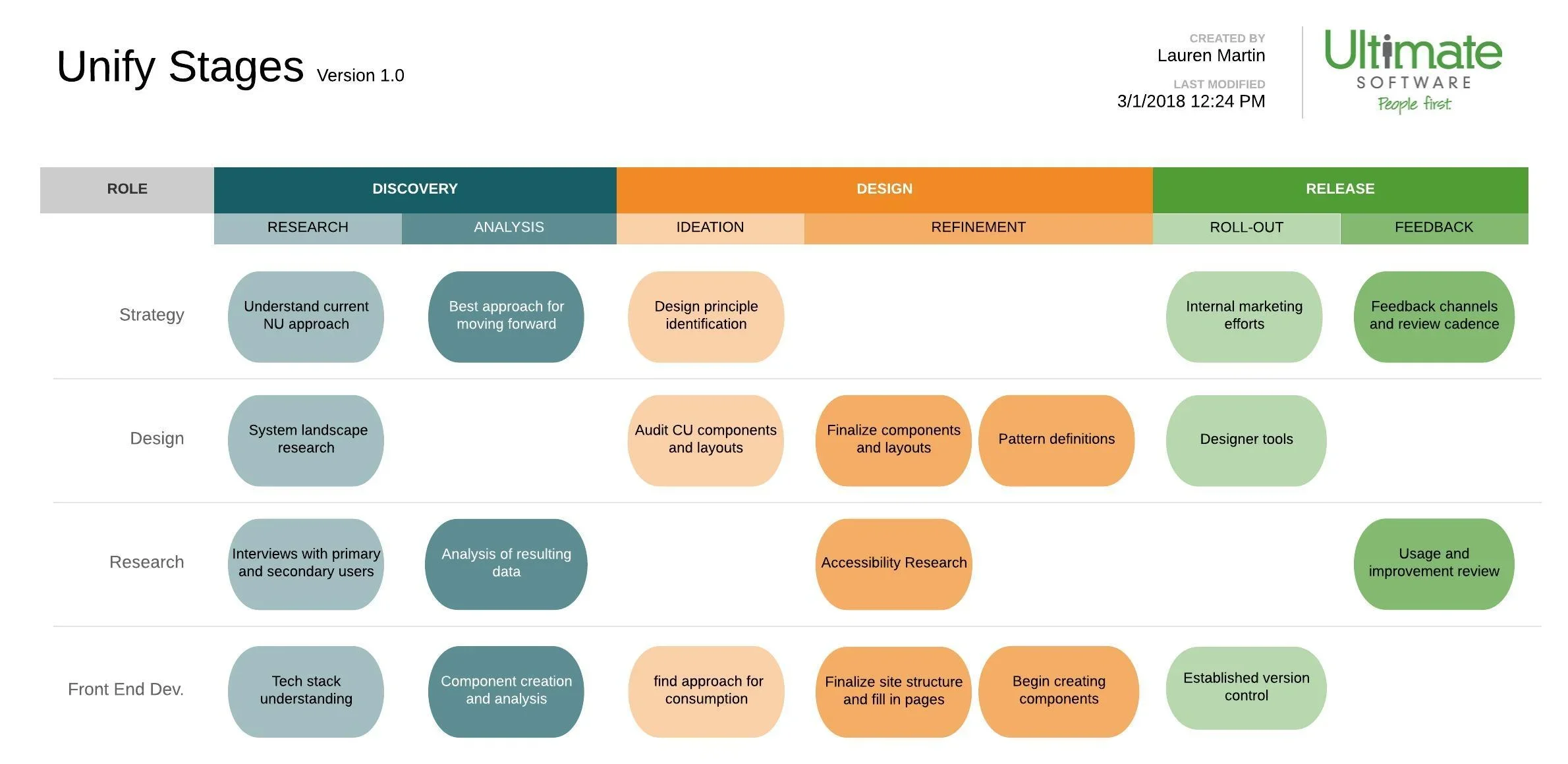
Good, better, best. Each product would have a realistic adoption path for its tech stack. We mapped the product lines to target levels (non-adopter, styles, main components, full adoption) for 2019 and 2020, prioritizing flagship products first.
Versioned releases: our goal was to start with fixed start and end dates, testing on current products, and release notes.
Maintenance: There would be a formal issue log in JIRA, a Slack channel, monthly open meetings, quarterly showcases and ad hoc mini-sprints.
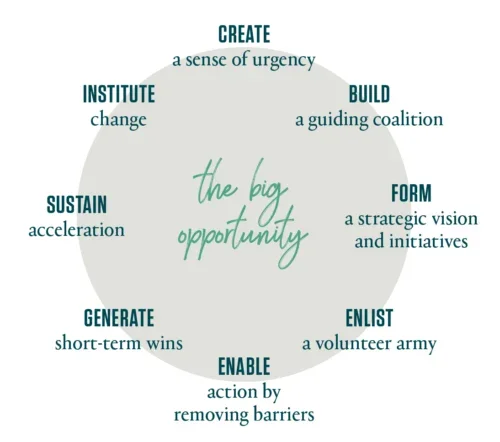
Change management. I planned the rollout using Kotter's 8 steps, starting with beta groups to build momentum before a broader release.
Results
I moved off the team and left Ultimate shortly afterward, so I can't speak to how the rollout went. I know Ultimate went on to build a design system, but I can't say whether it used this work or started over. What I can point to is the foundation I built: the research, strategy, principles, tested demo, adoption plan and release process.
The measures of success we had set for the program were engineering uptake, visual consistency that sales could notice, engineering efficiency, and a lighter integration burden.
Early signals within the time I was on it: engineers cited a principle in design reviews within weeks, and engineers asked for early access after the final round of testing.