Customer Success Homepage
Defeating the “where’s my ticket?” call
Ultimate Software
Role: Team Lead, UX Design
2018 Hackathon Event “48 hours”
The Challenge
8 Hours is a two-day event where teams can build anything and present it to leadership. Ours took on the customer support ticket dashboard. Customers had to dig for case information, and it was easier to call in than to check. Those status calls were costing the company an estimated up to half a million dollars a year.
My Role
I led the a team of four: assembled the resources, set strategy and checkpoints, allocated the work and aligned everyone around an end vision. I was also an individual contributor. I worked with a UX designer on the wireframes and did the promotional materials.
Research
We combined several sources:
Interviews with leadership, support reps and customers.
Past focus group results.
The financial cost of poor design.
Customer-submitted feedback.
What the focus group showed customers calling about:
Checking the status of business-critical tickets, such as payroll failures.
Understanding where a ticket was and who was working on it. Tickets bounced between people, which customers couldn't follow.
Promised update times passing without a word.
Escalating or adding information.
Some customers weren't looking at the portal at all.
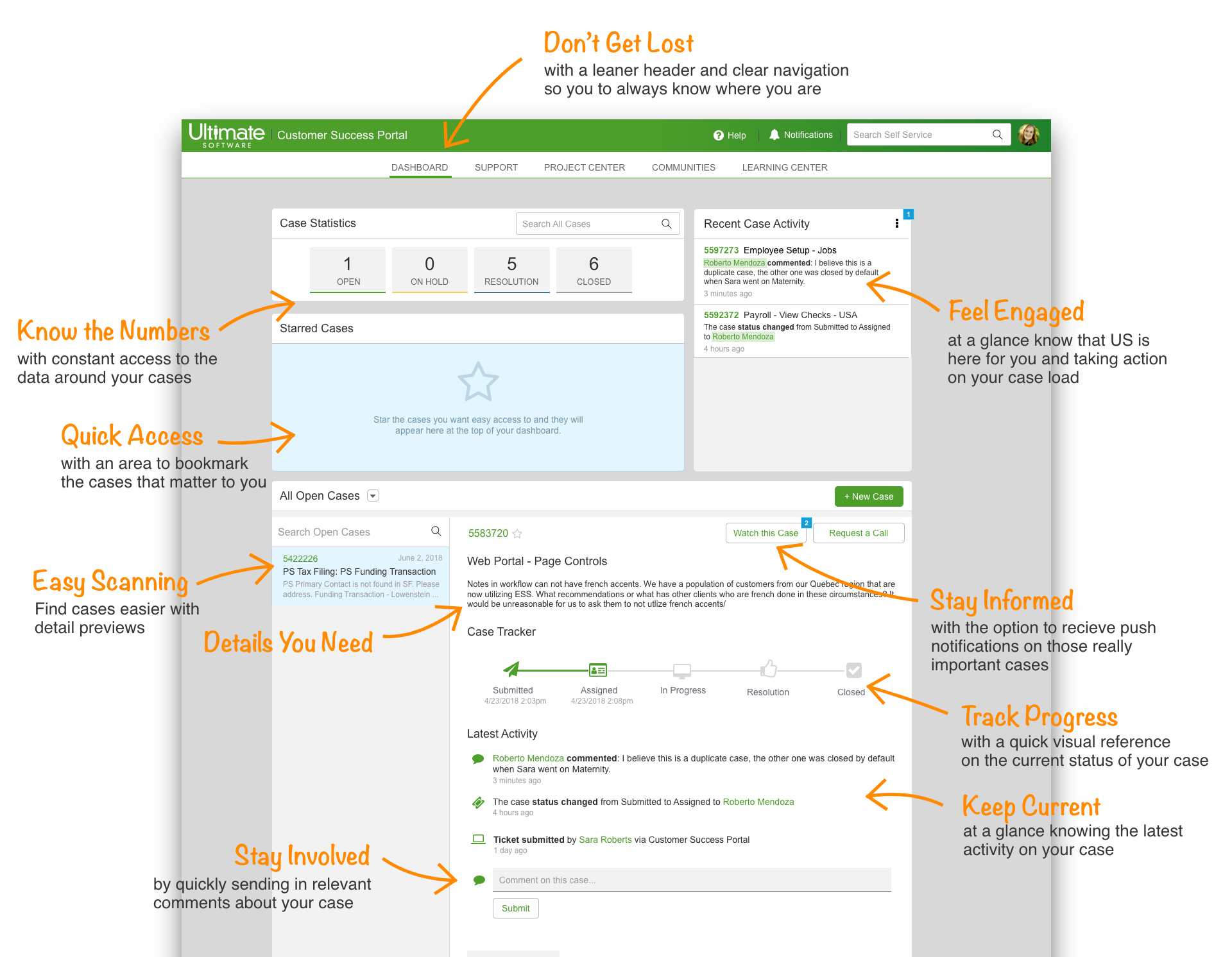
The recommendations were to show current status and owner, show when the next update will come, and notify customers immediately when something is escalated.
Process
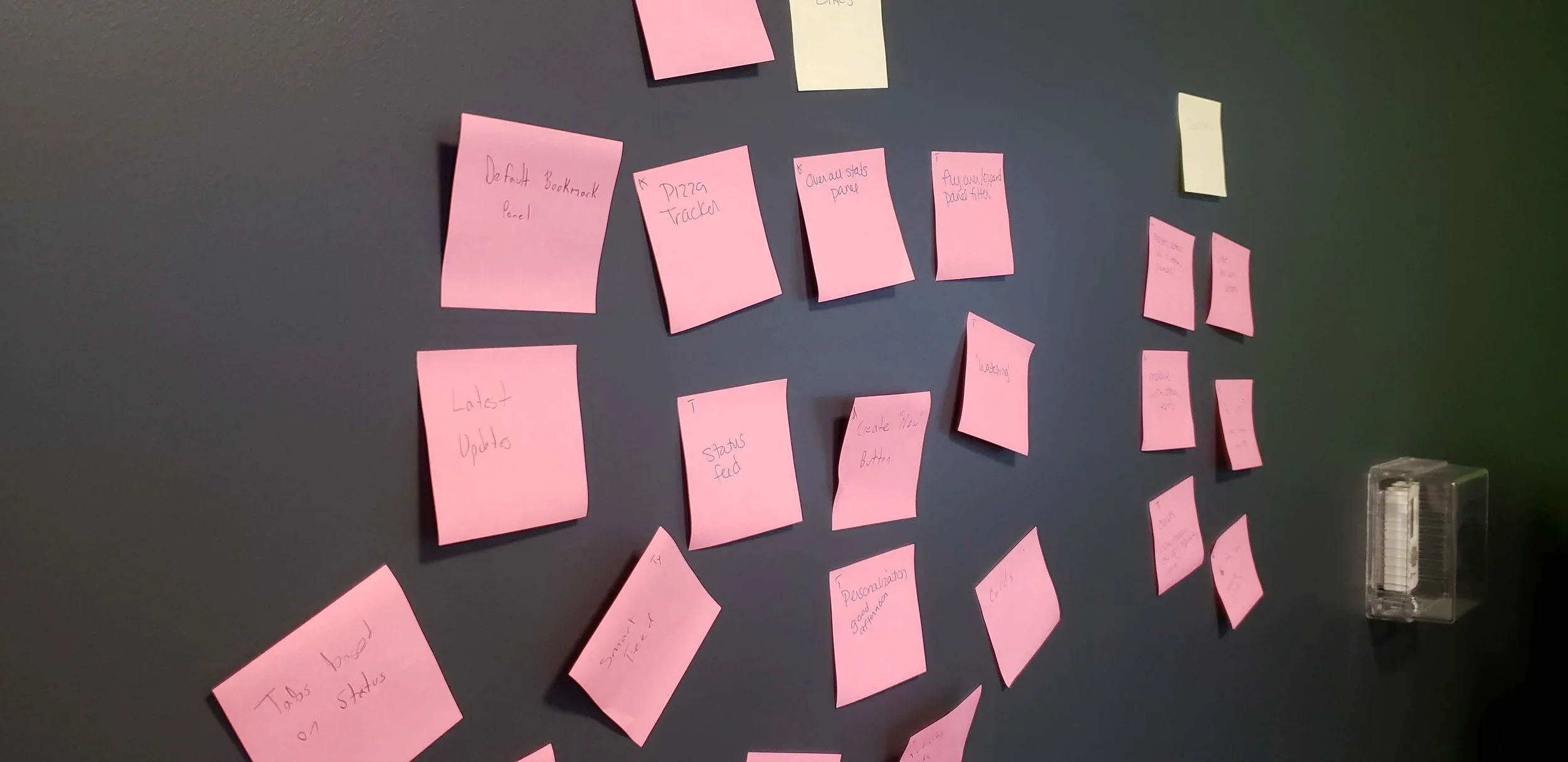
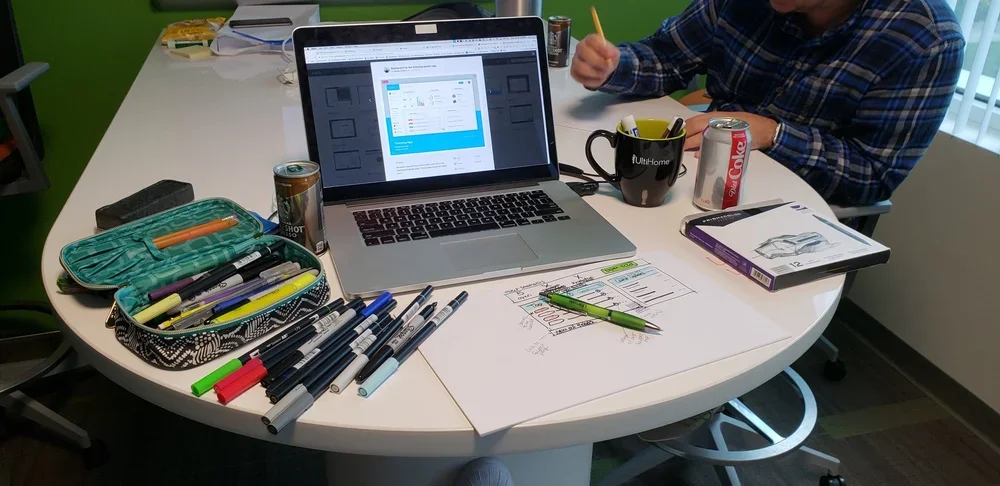
Brainstorm and sketch. We listed unknowns on a whiteboard, then each sketched ideas for ten minutes. We reviewed everything with post-its and voted.
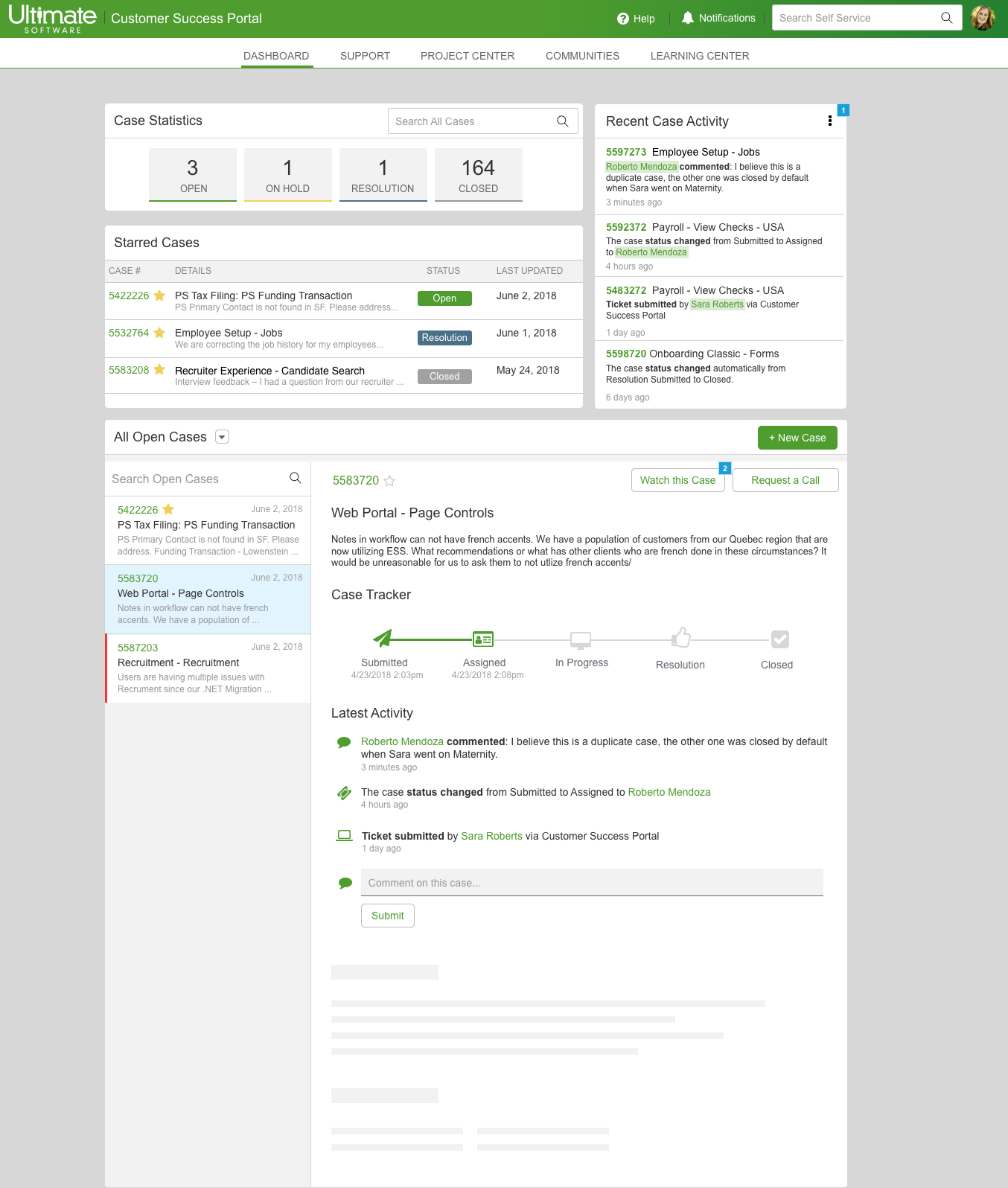
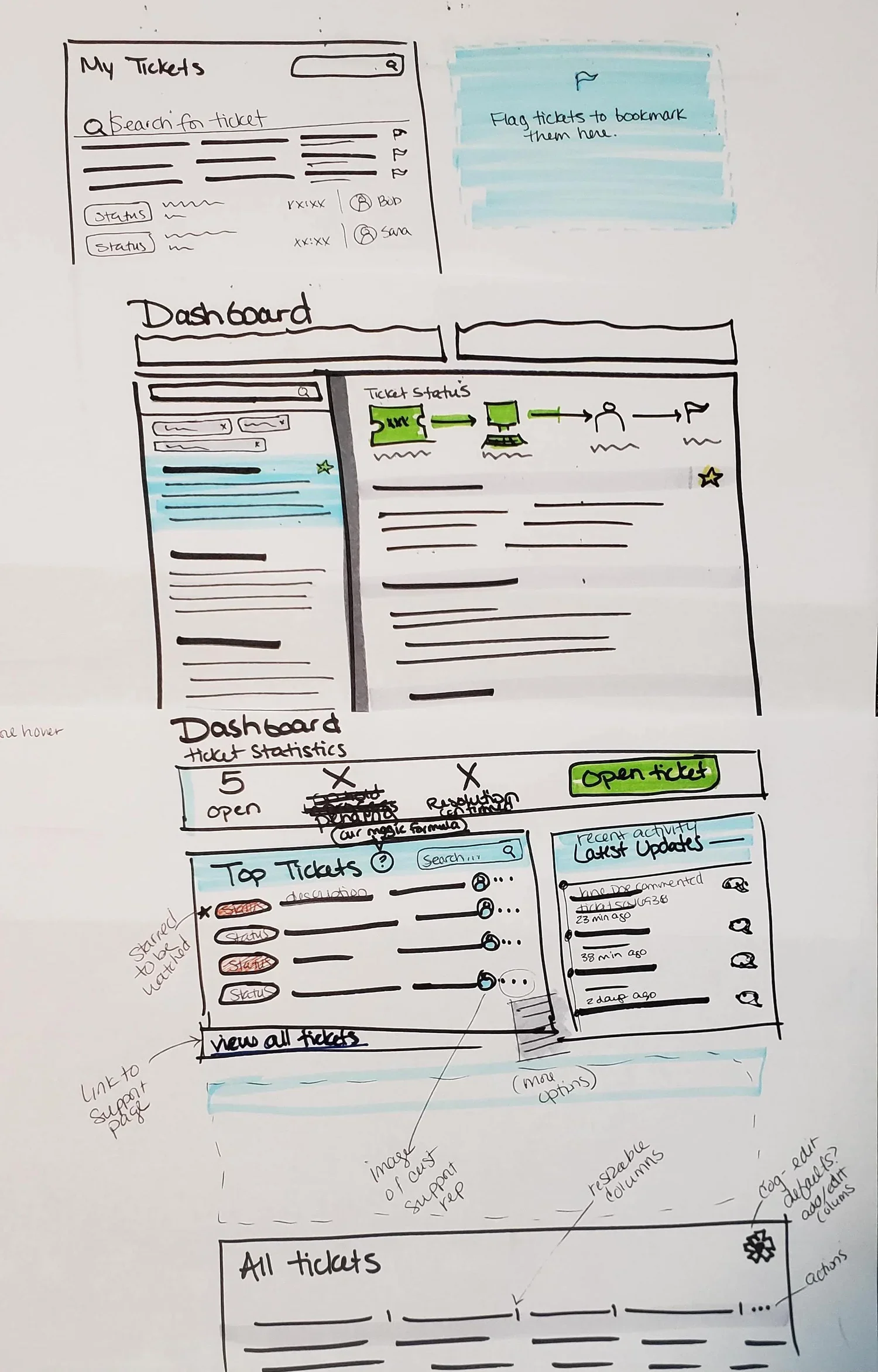
Idea. One team favorite was a ticket tracker inspired by a pizza delivery tracker, showing the stage of a ticket at a glance.
Feasibility. I wanted something the small Customer Success dev team could implement. We designed for Salesforce Lightning components, as close to out of the box as possible.
Wireframes. A designer and I created high-fidelity wireframes from the sketches.
The idea that mattered
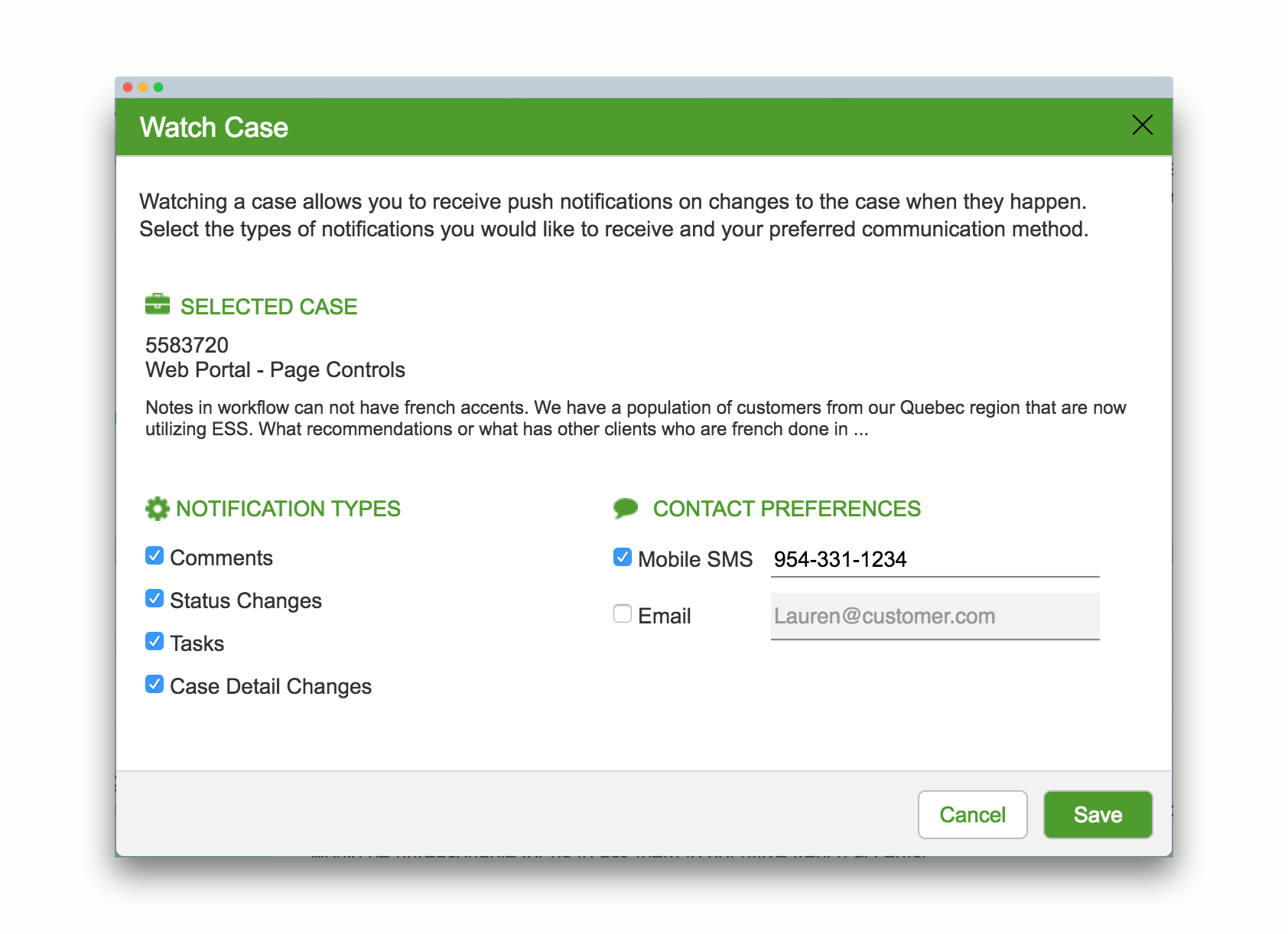
A tracker still required customers to check it. Then a text message on my smartwatch gave me the insight: updates should come to customers, so they can get back to work. I added a "Watch Case" feature, where customers choose email or SMS updates for the cases that matter most.
Finishing up
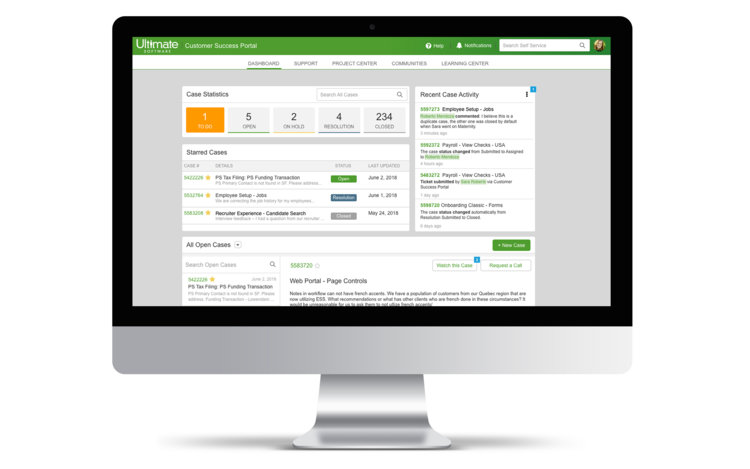
We reviewed the first round, refined it, and built the same homepage at three stages of the customer lifecycle. I made the handouts and the slide deck for the leadership presentation and the 48 Hours trade show.
Results
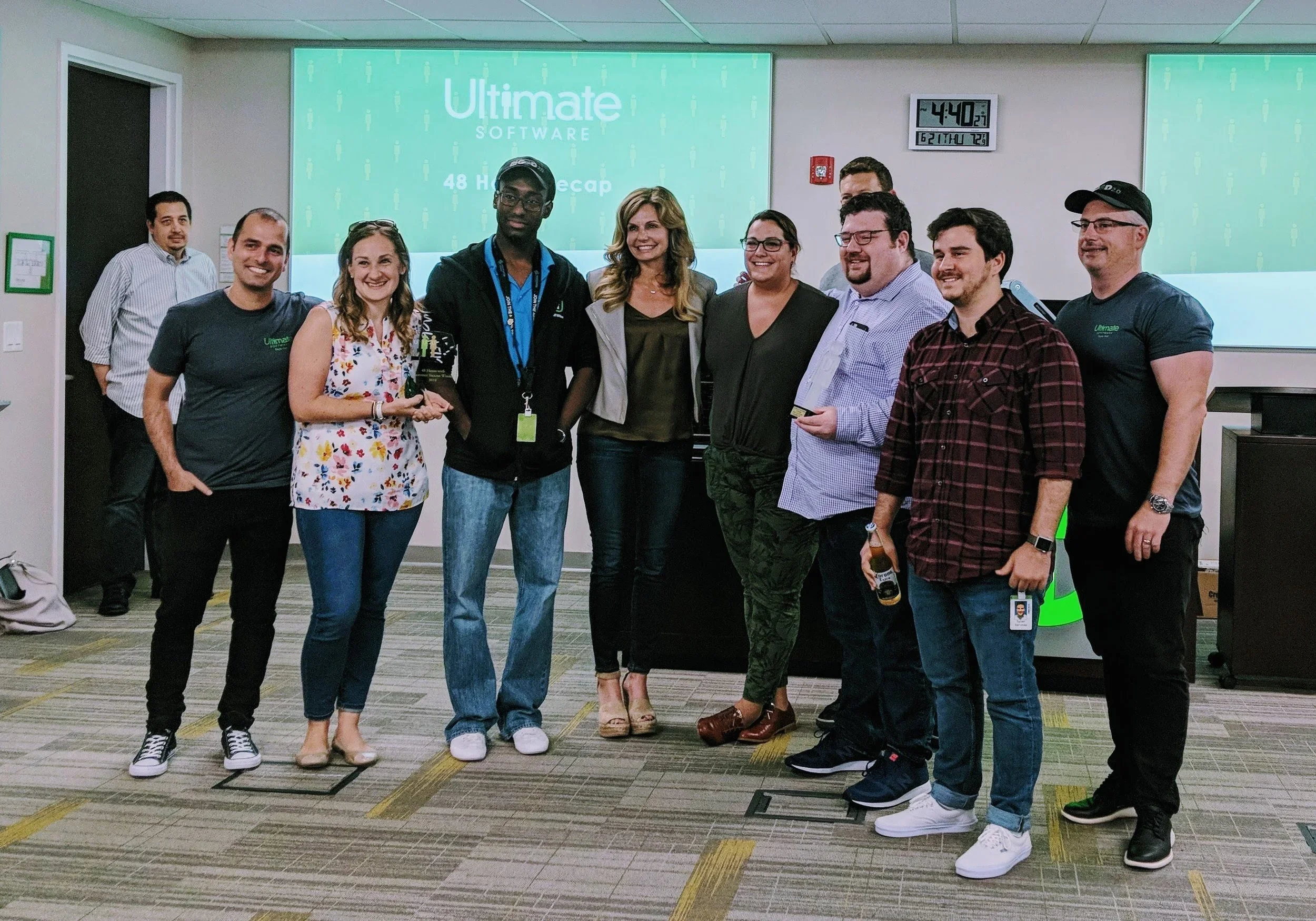
This was a hackathon project. It won two awards: Best Value Add at 48 Hours and Premier Partner Innovation from the Customer Support Partner team. I don't know whether the work was implemented after the event.