Building a Coherent Product Experience
Maturing the platform to support future growth through deeper customer adoption and improved new-customer activation.
Seesaw
Director of Product Design & Research
2023-2026
The Question
How could Seesaw mature the product experience so teachers could understand, navigate, and adopt a rapidly growing platform more easily?
Research Insights
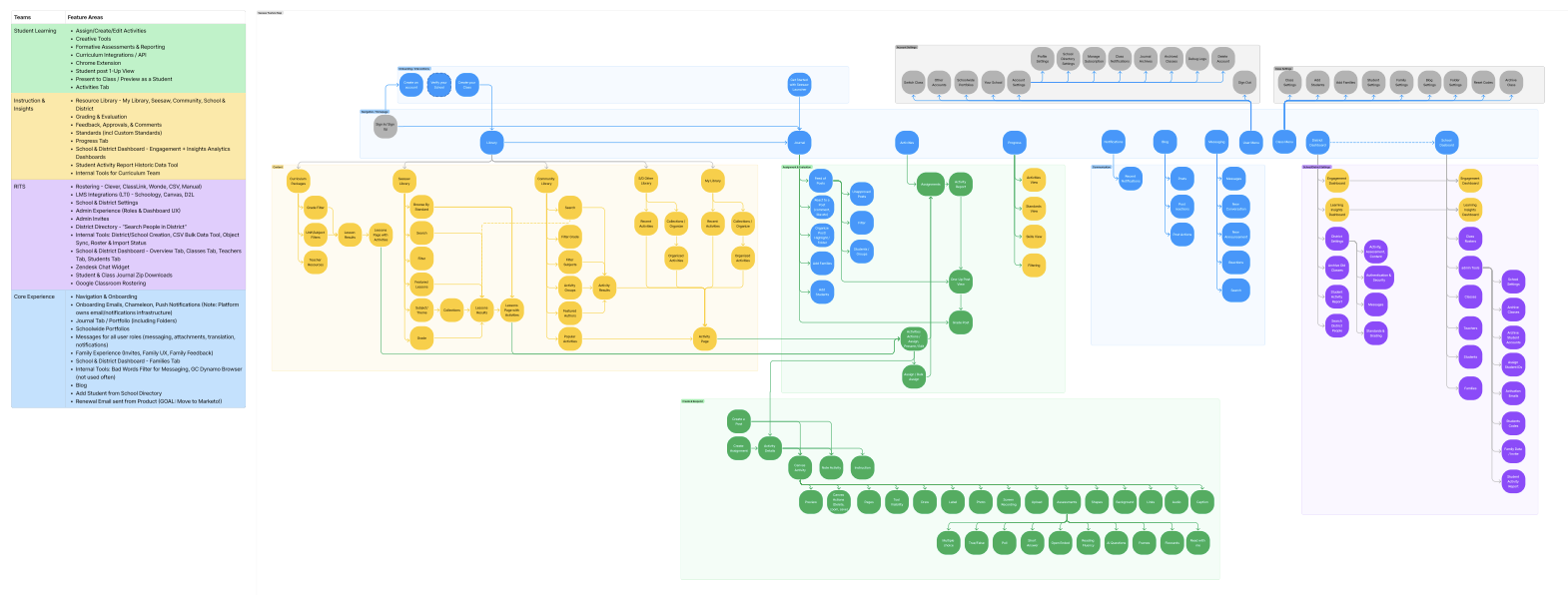
When I joined Seesaw in 2023, I experienced firsthand what new teachers often described in research: it was surprisingly difficult to orient within the product. The platform had evolved feature by feature without a unifying structure and no clear home base.
There was also no clear way to communicate with customers when a change was made, and no onboarding. This left users to figure out the product on their own, with limited time, causing a poor understanding of how to use the product, and it’s full capabilities.
“It’s a little bit too techie for
me, but it’s cool. So I see how
you would do it. It just seems
like it would be very time
consuming, I don’t even know
where to start.”
“I’m still trying to figure out how
to get to that main page. I don’t
know how to get back, is this the
main page?”
Key Decisions & Direction
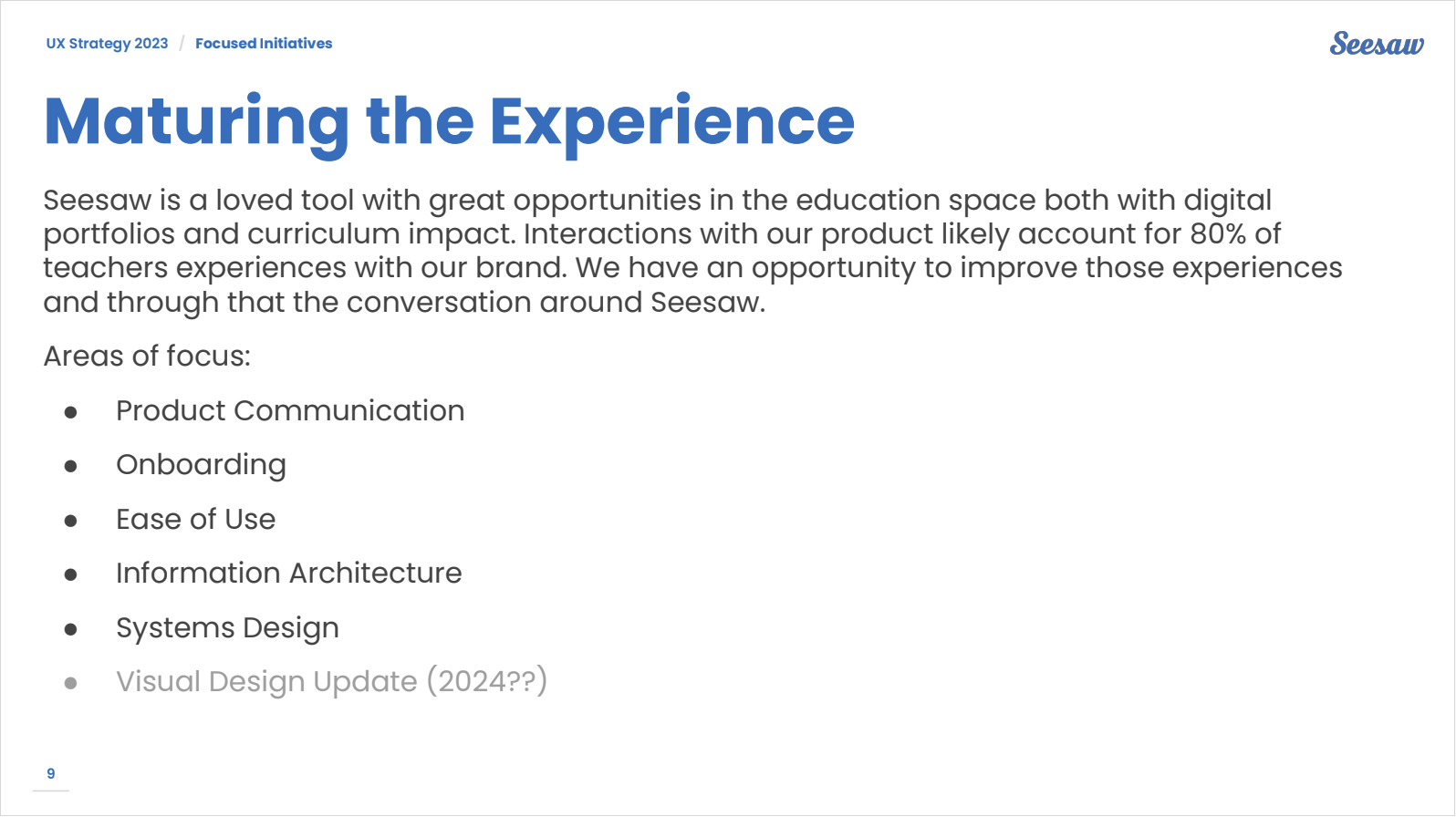
I established a multi-year vision for improving how customers understood, navigated, and adopted Seesaw. The work had to be delivered incrementally, but the strategic direction was coherent from the outset.
I setup a 3 -5 year strategy starting in 2023 that included the following which all went live or is in progress as of 2026:
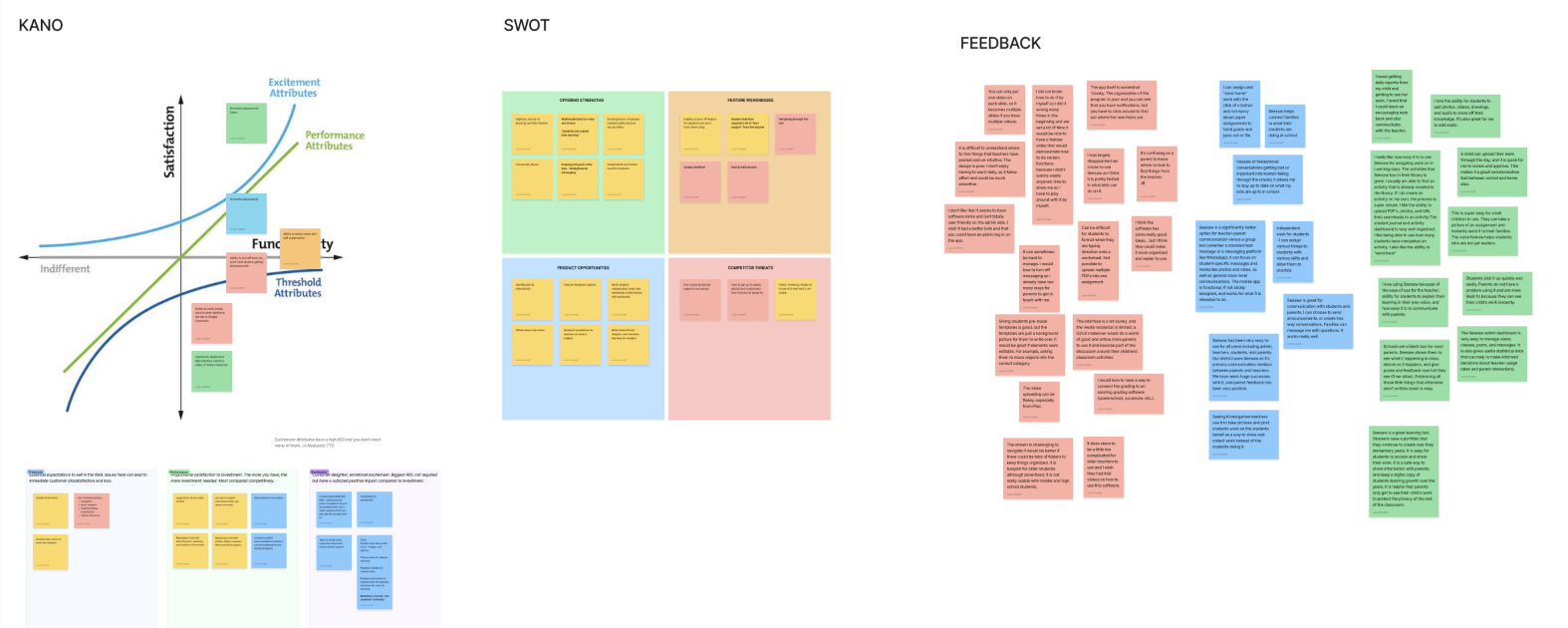
Expanding our research footprint and investing in broader customer feedback systems (2023-2025).
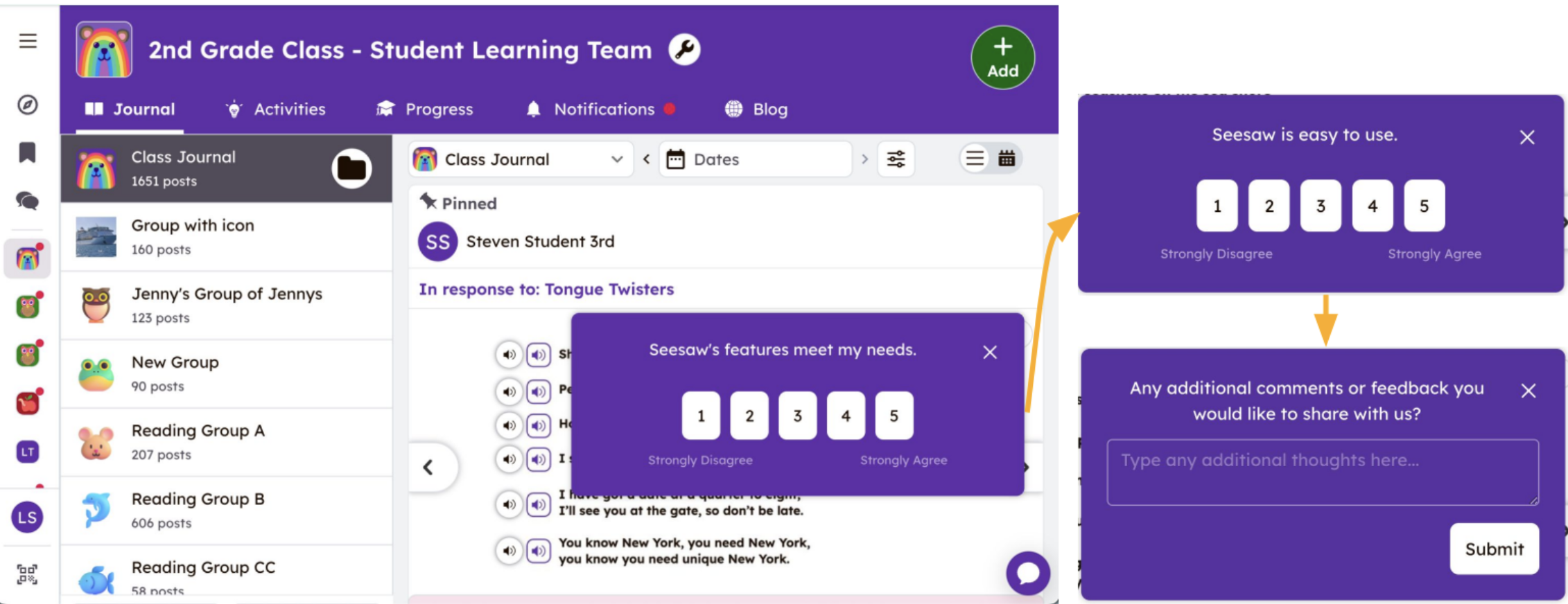
Implementing a way to communicate with the user. This will provide product announcements around updates, allow for rudimentary onboarding, and give opportunities to collect direct usage feedback (2023).
Setting up design system operations, creating a cadence around updates and providing specific designer leadership over it along with clear critique process enabled us to streamline our experiences across the product (2023).
Streamlining navigation to allow users to move seemlessly across the product instead of in and out of seperate features spaces. This additionally provided the space to scale our libraries up to accommodate regionalized content aligning with our business strategy of international expansion ( 2024-2025).
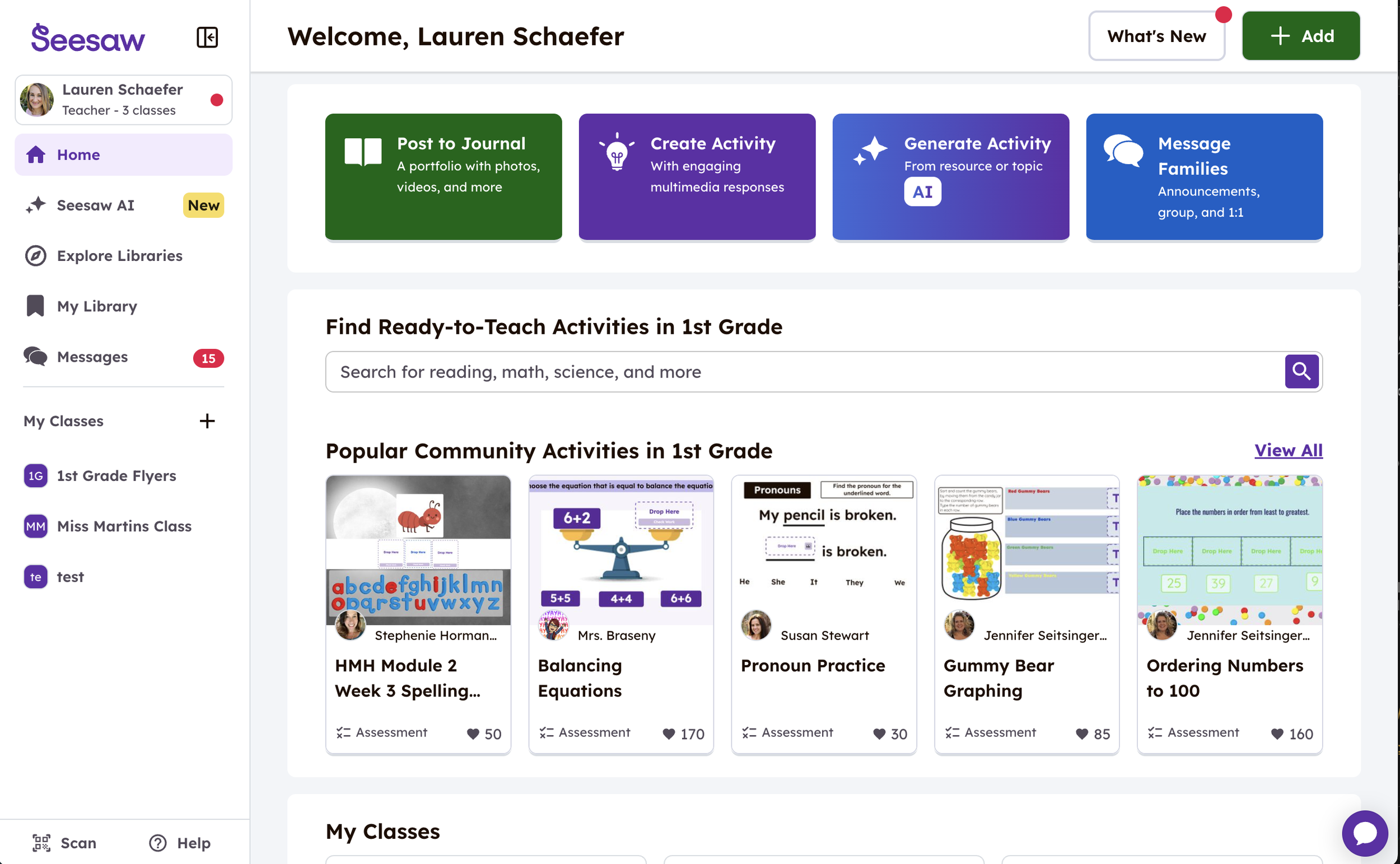
Providing a dedicated landing home page (2025) for new users not only helped them orient, but created a future for an onboarding experience into the product (~2027).
Each phase created the capabilities and organizational support needed for the next. While the long-term direction remained consistent, priorities shifted as the business evolved. Progress depended on building support incrementally and demonstrating value at each stage rather than pursuing a large-scale transformation.
Results & Outcomes
Product Results:
+11% increase in message engagement
+20% increase in journal interactions
+12% increase in assignment activity
Faster time-to-value for new teachers
Implementation of a single no-code messaging had +200% ROI on engineering within 9 months.
Increased feature awareness and renewal conversion through contextual messaging.
Created a scalable channel for product education and research feedback loops including UX-Lite surveys
Expanded communication use cases to renewal notices, targeted feedback prompts, and regional translations.
Raised successful activity search keyword matching from 36% to 90% and surfacing more relevant learning content.
Organizational Outcomes:
Recurring customer-intelligence mechanisms including UX-Lite, research operations and feedback loops.
Advanced experimentation maturity through validation-led practices
Stronger UX, PM, and engineering collaboration on product-wide initiatives
A scalable framework for future onboarding funnels and customer data for monitoring conversion
Groundwork for future adoption and expansion with regionalization using the updated library ecosystem.
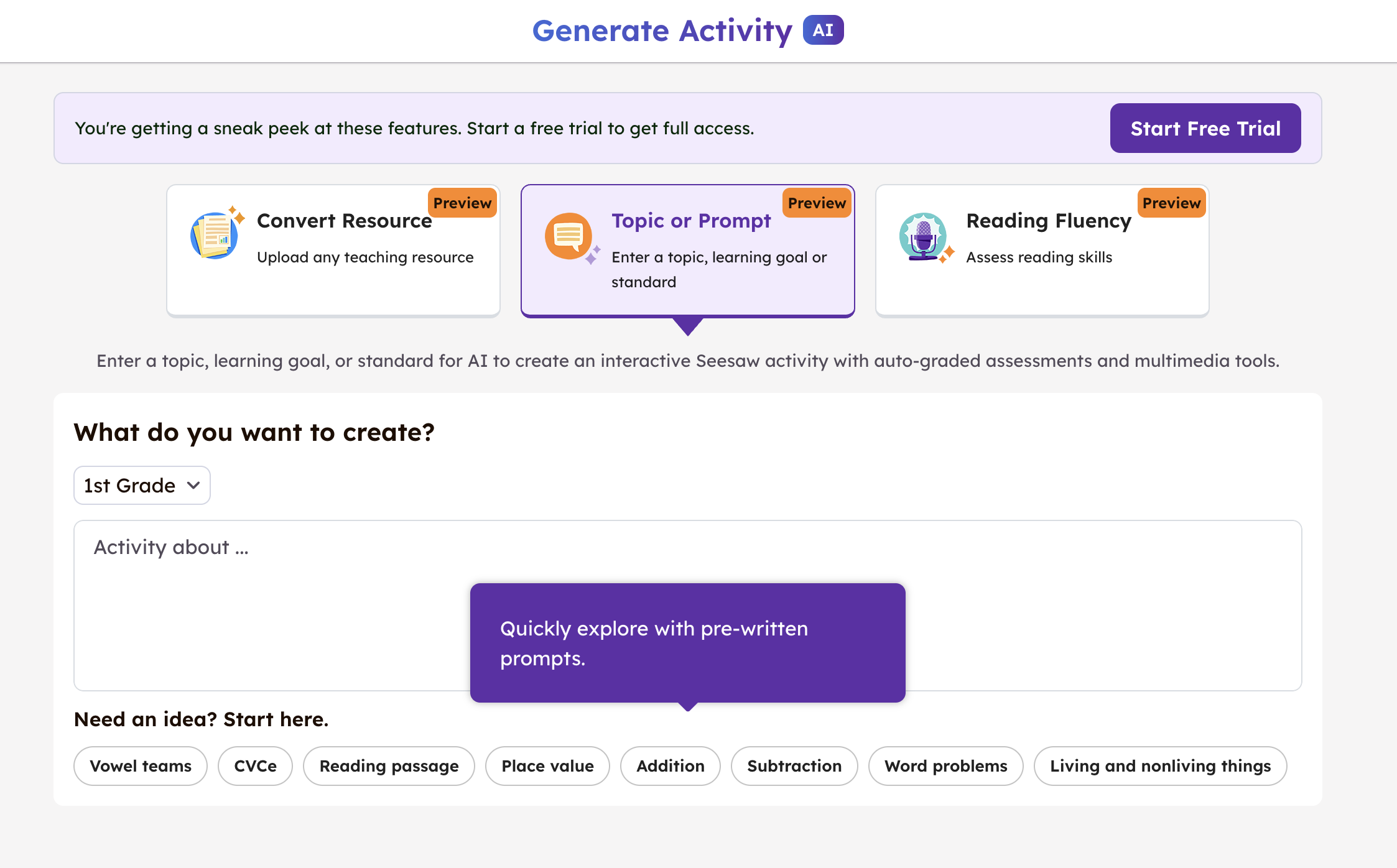
Sample of artifacts from strategic analysis and shipped features: