Building a High-Performing Design & Research Team
Creating the operating system that allowed Design and Research to contribute strategically and consistently.
Seesaw
Director of Product Design & Research
2023 – 2026
The Opportunity
As Seesaw grew, Design and Research had expanded rapidly but lacked consistent operating systems. Different designers approached work differently and worked in silos, research happened inconsistently, and cross-functional expectations varied across teams.
I took on leadership of the design and research efforts for the Seesaw experience ecosystem, spanning mobile, tablet, and desktop for students, teachers, families, and administrators. The product included content libraries, assignment flows and grading, a creative canvas, student journal, messaging, onboarding, homepage, navigation, and administrator dashboards.
My focus areas were clear:
Assess and grow the team’s skills and structure.
Align design around a shared framework and roadmap.
Strengthen research operations, tooling, and efficiency.
Assessing Team Skills & Growth Paths
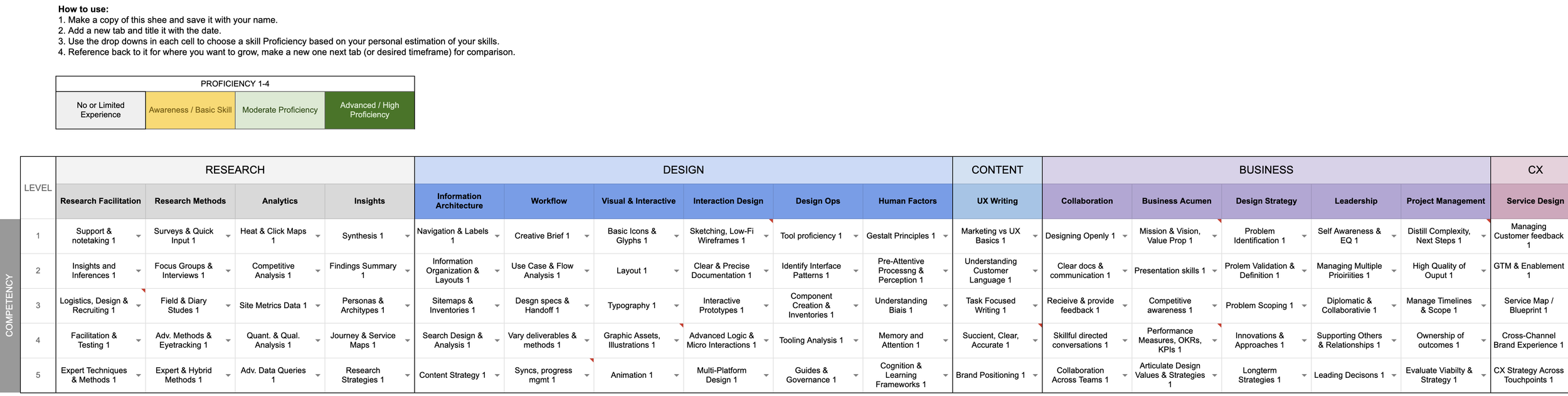
I began by evaluating skills, gaps, and potential growth areas. I created a structured self-assessment for each team member to complete, followed by my evaluation of their capabilities across craft, strategy, collaboration, and leadership.
I worked with HR to review existing leveling and created a career progression framework spanning six IC levels and three management levels, defining expectations across competencies. This framework later became a template adopted by other departments at Seesaw.
To build team balance, I proposed adjustments to hiring and role distribution, ensuring mentorship opportunities between senior and junior designers and creating more room for growth across experience levels.
Creating a Shared Design Framework & Roadmap
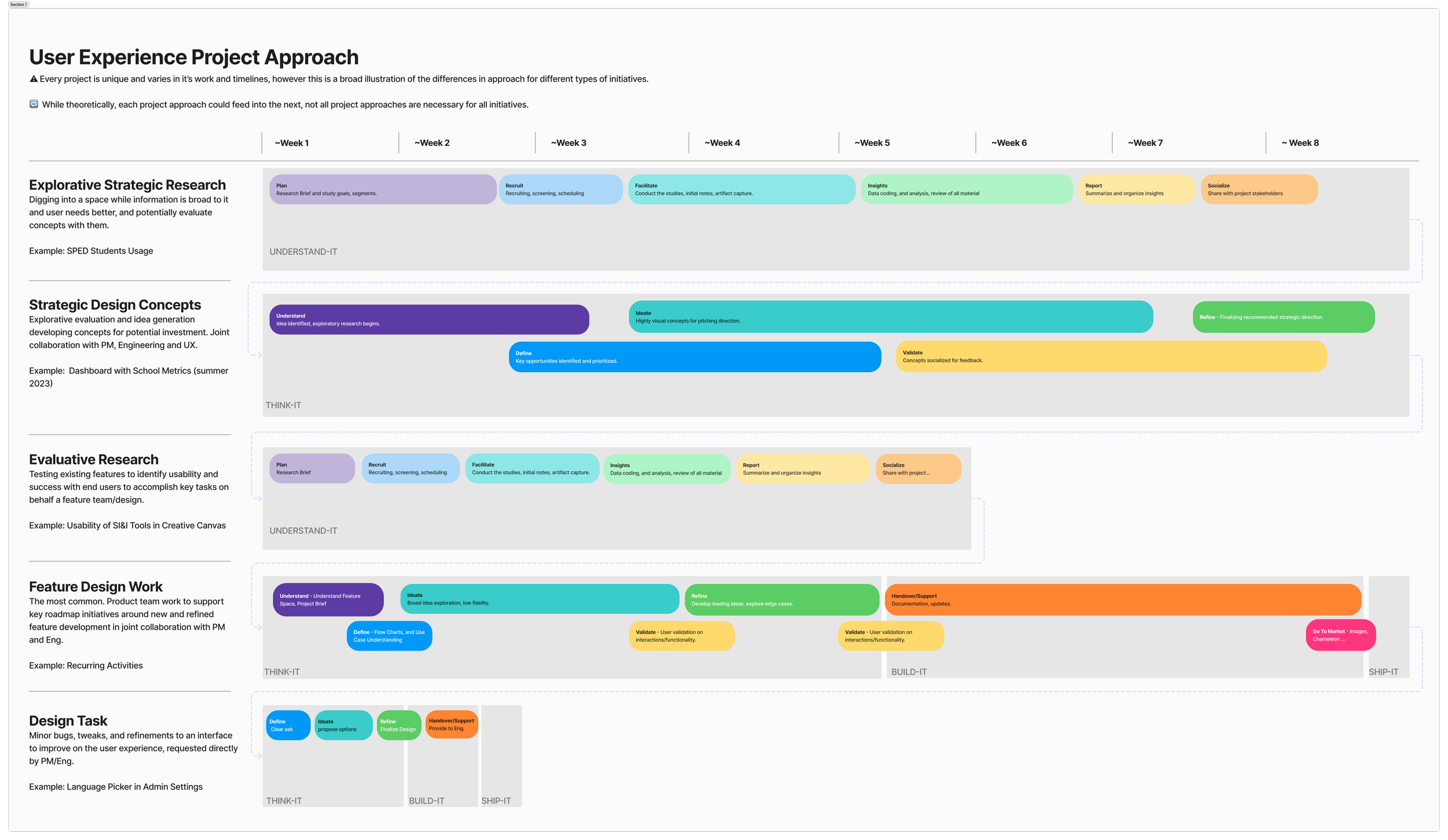
Each product area had its own PM–UX–Engineering trio, but collaboration was inconsistent. PMs typically defined projects before design engagement, limiting design’s ability to shape product direction.
I shifted the model to proactive collaboration, working with PMs to get ahead of quarterly priorities so designers could engage earlier in problem framing and ideation. This new rhythm provided:
Time for design to contribute to problem definition and hypothesis development.
Space to balance designer allocation dynamically based on upcoming priorities.
Ability to support design input across higher-impacting and cross-functional initiatives.
I also ensured visibility of the UX roadmap with active and upcoming work, enabling cross-team awareness and smoother collaboration.
Establishing Process & Quality Expectations
Within the first few months, I noticed duplicated work, such as three designers independently creating versions of the same filter component. To address this, I implemented:
Weekly Design Critiques: for shared visibility and peer feedback.
Weekly Team Syncs: including a “round robin” to discuss current projects, blockers, and learning moments.
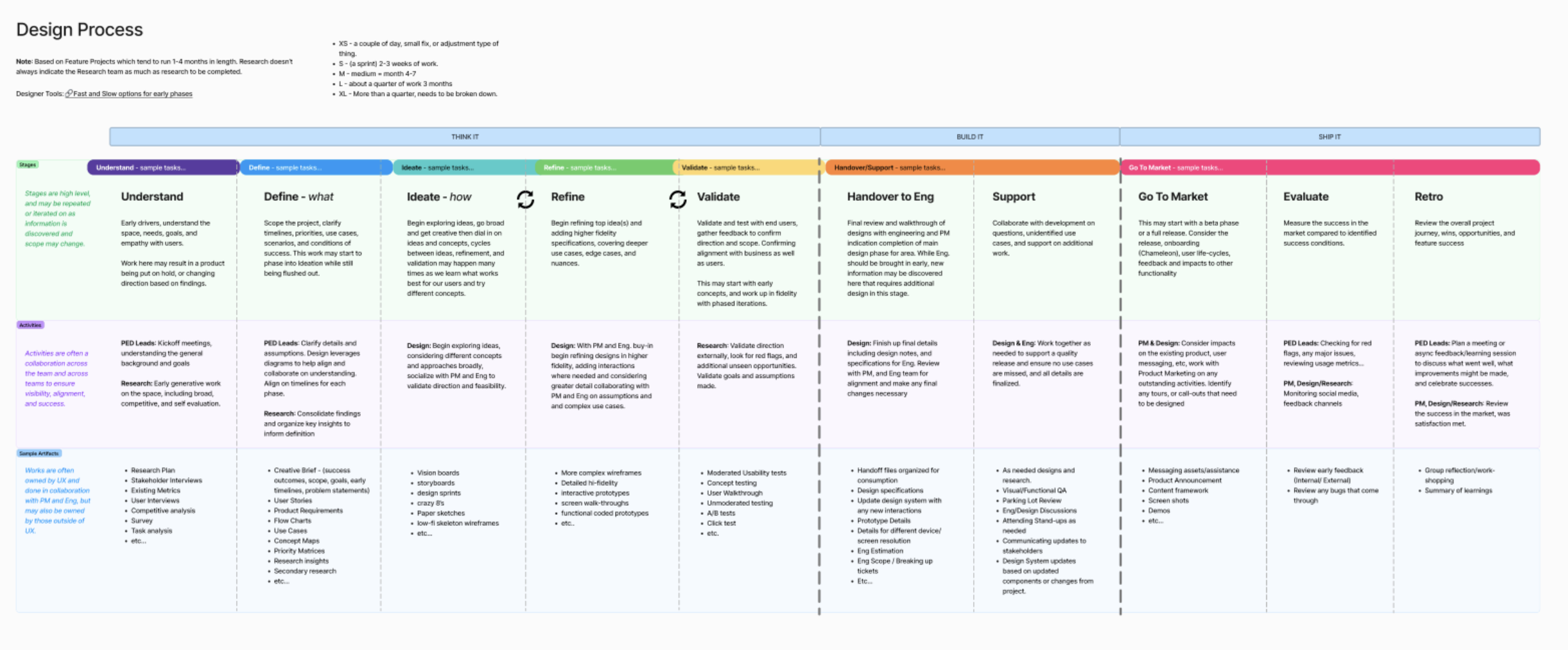
A Standardized Design Process: grounded in design thinking, aligned to Seesaw’s product development cadence, and outlining clear expectations from discovery through go-to-market.
Design System Ownership: appointed a Design System Lead, giving them ownership over maintaining consistency, pattern updates, and accessibility alignment.
Accessibility Quick Guide: a lightweight reference for inclusive design practices integrated into our review process.
These steps built alignment, reduced redundancy, and improved product consistency across platforms.
Improving Research Operations
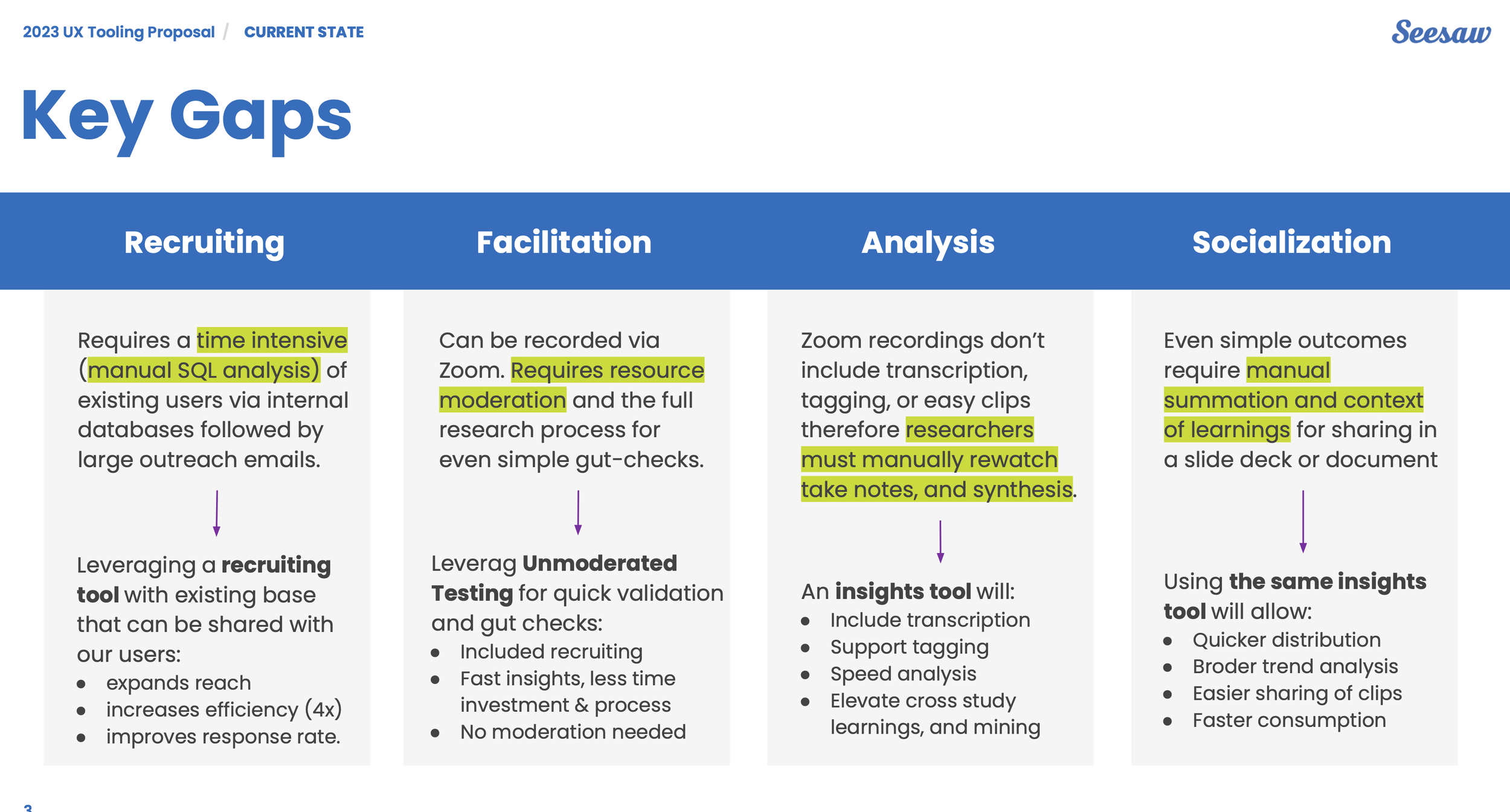
The research process was slow and manual, often taking weeks to recruit a handful of users, issuing payments manually via individual Amazon gift cards, and storing notes and analyses in scattered Google Docs. Reports were long, text-heavy, and underutilized.
I developed a research operations proposal that gained leadership approval and funding, cutting research time in half.
This included:
Centralized tooling for recruiting and participant management
Incentive distribution systems to replace individual payments
Transcription and tagging tools to accelerate analysis
Unmoderated testing capabilities to enable designers to validate ideas quickly and independently
The changes democratized access to user insights and built momentum for a culture of continuous learning and fast feedback.
Key Leadership Focus
Team Structure: Transitioned from siloed pods to a hybrid, flexible model based on skill and project needs.
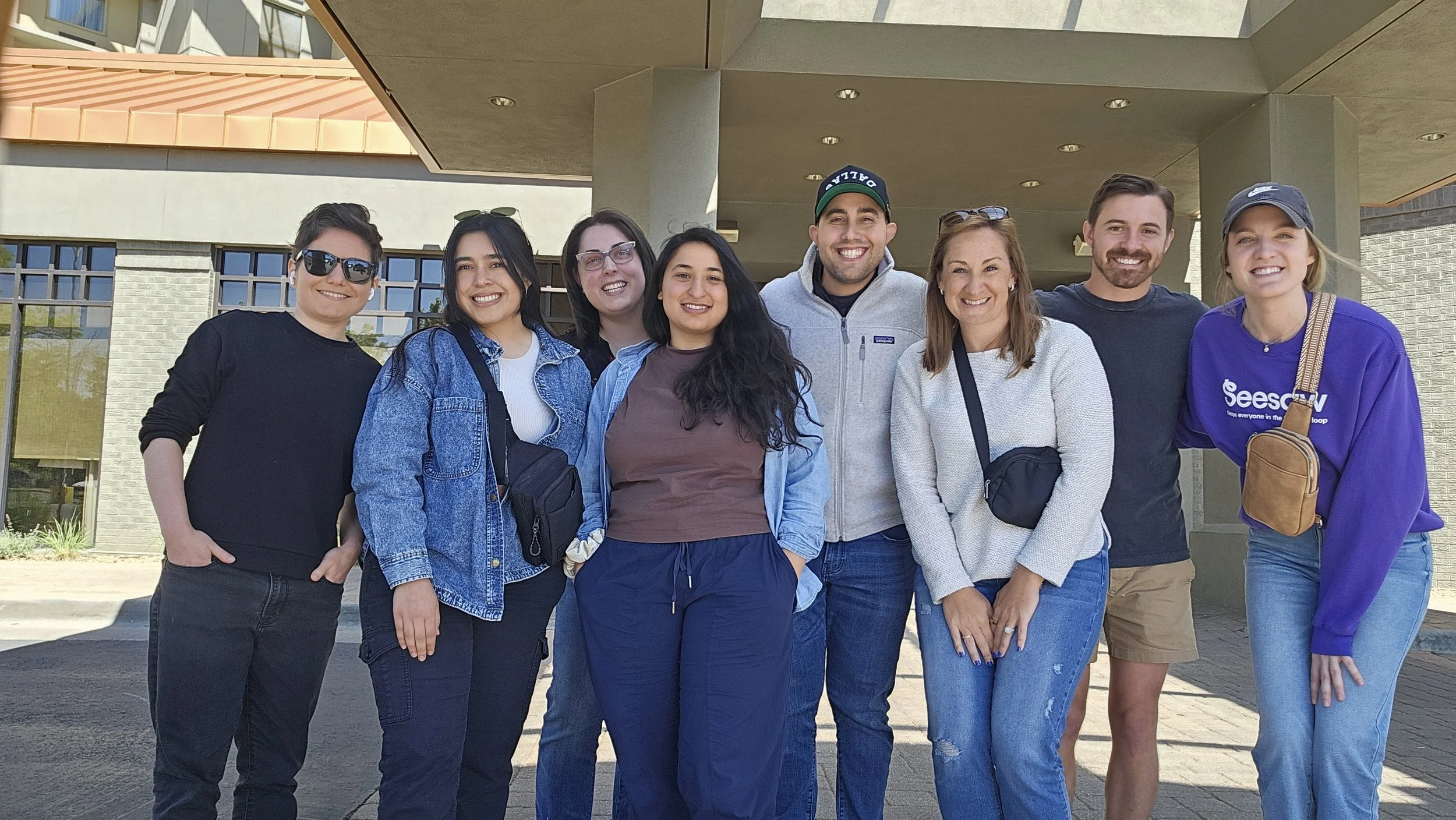
Culture & Cadence: Introduced regular critiques, team syncs, and semi-annual bonding events to build trust and shared accountability.
Design Operations: Strengthened design system governance and roadmap visibility, embedding UX earlier in planning.
Research Maturity: Standardized tooling for recruiting, incentives, and repositories.
Coaching & Mentorship: Personalized growth plans for each designer, focusing on their unique strengths and aspirations.